
One View Across Your Entire Operation
Salesforce for the Manufacturing Industry
Connect customer-facing operations with the systems that keep your manufacturing business running.


Connect Your Manufacturing Operations with Smarter Customer Processes
Manufacturing companies often have strong operational systems, but sales, agreements, forecasting, partner relationships, and service data can still sit across spreadsheets and disconnected tools. We help manufacturers use Salesforce to create a connected commercial platform that works alongside ERP, MES, and other business systems. Our approach focuses on improving visibility, strengthening customer and channel relationships, and building service processes around accurate account and asset information.
Our Salesforce Manufacturing Services
Every manufacturing Salesforce project starts with understanding how your teams work, where information sits, and what needs to improve. We combine consulting, implementation, integration, and ongoing support services to build a Salesforce environment that fits your processes and existing technology landscape.
Salesforce manufacturing consulting
We assess your sales, service, channel, and customer processes to define the right Salesforce approach. Our recommendations focus on business requirements, system fit, and practical steps for implementation.
Business and technical discovery
We document your current processes, users, data sources, and connected systems before designing the solution. This helps identify gaps, dependencies, and priorities early in the project.
Salesforce solution architecture
We design the Salesforce data model, application structure, security approach, and integration framework based on your manufacturing environment. The goal is to create a foundation that supports current needs and future changes.
Manufacturing Cloud implementation
We configure Salesforce Manufacturing Cloud for sales agreements, account forecasting, supplier relationships, warranty processes, and asset visibility. The implementation is shaped around how your manufacturing teams manage customer commitments.
Sales Cloud and Service Cloud implementation
We configure Sales Cloud and Service Cloud to manage opportunities, customer accounts, cases, service requests, knowledge, and support workflows. This gives commercial and service teams a structured way to manage customer interactions.
Experience Cloud and partner portal development
We build Salesforce Experience Cloud portals for dealers, distributors, suppliers, and customers. These portals provide controlled access to relevant information while improving collaboration across partner networks.
Field Service implementation
We configure Salesforce Field Service for scheduling, technician workflows, mobile access, work orders, and service operations. This helps teams manage field activities with better visibility into assets and customer history.
Salesforce customization and development
We extend Salesforce capabilities using Flow, Apex, and Lightning Web Components when standard features do not meet specific requirements. Custom solutions are designed around your processes and operational goals.
Manufacturing Challenges We Address
Manufacturers usually approach us with a recognizable set of commercial and data problems rather than production problems:
These are challenges Salesforce is well suited to solve when it is configured around your processes and connected carefully to your operational systems.
Demand and forecast data spread across spreadsheets, making account-level planning slow and hard to trust.
Long-term sales agreements tracked outside any shared system, with limited visibility into actual volumes.
Dealer and distributor activity that is difficult to see, leaving channel performance and pipeline unclear.
Service teams working without reliable access to asset history, warranty status, or installed-base records.
Quoting and pricing that depend on manual steps and disconnected approvals.
Customer and partner requests handled over email, with no structured record or consistent follow-up.
Salesforce Products We Apply to Manufacturing Requirements
We select Salesforce products against a clear requirement, not to fill a checklist. Some manufacturers need the full Manufacturing Cloud model; others are served better by Sales Cloud or Service Cloud with focused configuration.
- Salesforce product
Manufacturing Cloud
Sales Cloud
Service Cloud
Experience Cloud
Field Service
Revenue Cloud / CPQ
Data Cloud
Agentforce & Einstein
MuleSoft
Tableau & CRM Analytics
- Where it helps manufacturers
Sales agreements, account-based forecasting, program-based supplier forecasts, warranty and asset service lifecycle
Leads, opportunities, accounts, and pipeline for direct and channel sales
Case management, entitlements, and knowledge for customer and product support
Dealer, distributor, partner, and customer portals
Scheduling, mobile work orders, and onsite service coordination
Configured quoting, pricing, and approval workflows
Unifying customer, account, and asset data across systems
Assisted service, guided workflows, and predictive insight where data supports it
API-led integration with ERP, MES, and other platforms
Operational dashboards and reporting
Where a requirement is specific, for example structured, entitlement-driven product support, we implement Salesforce Service Cloud with case, knowledge, and SLA configuration rather than a broader industry package.
Manufacturing Cloud is appropriate when a business runs long-term volume agreements, plans demand by account, works with program-based supplier relationships, or manages asset-and-warranty-centered service. It may be more than a business needs when the core requirement is straightforward pipeline or case management, in which case Sales Cloud or Service Cloud with custom configuration is a more proportionate choice.
Manufacturing Use Cases We Enable
Across the revenue and service lifecycle, we configure Salesforce to support the day-to-day work of manufacturing teams:
Sales agreement management
Account-based forecasting
Channel and distributor visibility
Partner onboarding and enablement
Rebate and incentive management
Quote and pricing workflows
Order and fulfilment visibility
Product and catalogue management
Warranty management
Asset and installed-base visibility
How Salesforce Complements Your Manufacturing Systems
Salesforce is a customer and commercial platform. It is strongest at managing relationships, agreements, forecasts, channel activity, service, and engagement. It is not a production or enterprise resource system, and we never position it as one. Your ERP, MES, MRP, PLM, and related platforms remain the systems of record for production, inventory, financials, and shop-floor control. Salesforce connects to those systems so commercial and service teams work from consistent information without changing where that data is mastered.
| Data domain | Typical system of record | Role of Salesforce |
|---|---|---|
| Production scheduling & shop floor | MES / production planning | Consumes status for delivery and service visibility |
| Inventory & materials | ERP / MRP / WMS | References stock and lead-time signals for sales and service |
| Financials & invoicing | ERP / accounting | Reflects order and agreement context, not the financial ledger |
| Product engineering & BOM | PLM | Uses product and configuration data for catalogue and quoting |
| Customer, agreement & channel | Salesforce | Owns relationship, agreement, forecast, and service records |
Manufacturing System Integrations
Salesforce delivers most value when it exchanges data cleanly with your operational systems. Our Salesforce integration services connect the commercial layer to the platforms that run production and fulfilment.
Systems we connect and why
ERP — SAP, Oracle, Microsoft Dynamics, NetSuite, or custom
order status, pricing, account, and inventory context inside CRM.
MES and production planning
production and delivery status for commitment and service visibility.
MRP
material and lead-time signals that inform sales and service conversations.
PLM
product structure and configuration data for catalogue and quoting.
WMS and supply chain platforms
shipment and stock visibility for order and service updates.
QMS
quality and non-conformance context linked to assets and cases.
CPQ and order management
quoting, pricing, and order-lifecycle continuity.
E-commerce and PIM
consistent product and customer data across digital channels.
IoT and connected-equipment platforms
asset telemetry that supports proactive and predictive service.
Document management and e-signature tools
controlled contract and agreement handling.
Telephony and customer support platforms
connected, logged customer service interactions.
Controlled Data Migration and Governance
Migration quality depends on preparation, ownership, mapping accuracy, testing, and governance — not on a single import step. Our Salesforce data migration approach is built around controls that reduce risk at each stage.
Our Salesforce Implementation Process Built Around Your Manufacturing Needs
Manufacturing Salesforce projects involve multiple systems, teams, and business processes that need to work together. Our implementation approach follows a structured process that adapts to your environment, from initial discovery and solution design through deployment and ongoing support.
Step:1
Understand your current environment
- Review current sales, service, and channel management processes
- Identify existing systems, data sources, and integration dependencies
- Document business goals, user needs, and project priorities
- Map workflows, data structures, and user responsibilities
- Select Salesforce products based on specific business needs
- Define integration approach, security model, and delivery roadmap
Step:2
Design the right Salesforce roadmap
Step:3
Configure Salesforce for your processes
- Configure Sales Cloud, Service Cloud, and Manufacturing Cloud features
- Develop custom solutions using Flow, Apex, and Lightning components
- Set up automation, approvals, and user-specific experiences
- Integrate ERP, MES, PLM, and related manufacturing platforms
- Clean, map, and validate customer, product, and asset data
- Test data exchange, migration results, and system performance
Step:4
Connect systems and migrate data
Step:5
Prepare teams and launch the solution
- Conduct system testing and user acceptance testing
- Configure security settings, access controls, and deployment plans
- Provide training materials and user guidance sessions
- Monitor system performance, integrations, and user feedback
- Provide Salesforce administration, support, and enhancements
- Review improvements based on changing business requirements
Step:6
Support and improve after launch
Why HyphenX: A Salesforce Partner Focused on Practical Manufacturing Outcomes
Choosing the right Salesforce partner matters when your CRM needs to work alongside complex manufacturing systems. We combine Salesforce expertise, industry understanding, and careful planning to build solutions that fit your processes and long-term operational needs.
Salesforce expertise built around your requirements
Manufacturing systems understanding
Focus on governance and implementation quality
Support beyond Salesforce deployment
Salesforce for the Manufacturing Industry
Salesforce for Manufacturing, Connected End-to-End by Certified Experts
Manufacturers need Salesforce connected to ERP, dealer portals, and service operations. Our certified Sales and Service Cloud consultants, integration architects, and Experience Cloud consultants, from a team with 250+ Salesforce certifications, build systems that cover the full order and service lifecycle.
Core Certifications
Active Multi-Cloud Competency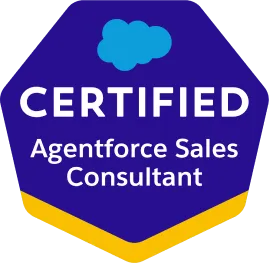
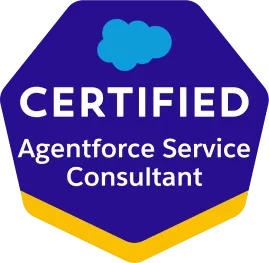
- CERTIFIEDExperience Cloud Consultant
These are the certifications that matter most for this service. To see our full Salesforce professional stack, including every badge our architects, developers, and consultants hold, visit our About Us page.
Start Planning Your Salesforce Manufacturing Roadmap
Every manufacturing Salesforce journey starts with understanding your current systems, processes, and business goals. We work with your team to define the right approach, whether you need Manufacturing Cloud, Sales Cloud, Service Cloud, integrations, or ongoing platform support.
Get in Touch
We’d love to hear from you. Please fill out the form below to reach out to us.
FAQs
Salesforce helps manufacturers manage customer accounts, sales activities, service requests, partner relationships, and communication history in one platform. It gives teams better visibility into customer interactions while working alongside existing manufacturing and operational systems.
Yes, Salesforce can be adapted for manufacturers of different sizes. Smaller companies may start with Sales Cloud or Service Cloud, while growing manufacturers can add industry-specific features as processes become more complex.
Salesforce Manufacturing Cloud includes features designed for manufacturing needs, such as sales agreements, account-based forecasting, and program management. Standard Salesforce products can support general sales and service processes with suitable configuration.
Yes, Salesforce can help manufacturers organize dealer and distributor information, track partner activity, manage opportunities, and provide controlled access through partner portals. This creates better visibility across indirect sales channels.
Implementation timelines depend on business processes, integrations, data complexity, customization requirements, and user groups. A focused Salesforce rollout may take less time, while enterprise implementations require detailed planning and phased delivery.
Yes, Salesforce can integrate with ERP platforms such as SAP, Oracle, Microsoft Dynamics, and NetSuite. These integrations allow commercial teams to access relevant operational information while keeping core ERP data ownership intact.
Manufacturers typically migrate customer records, account information, contacts, agreements, assets, service history, product details, and relevant sales data. The migration scope depends on business needs, data quality, and long-term usage requirements.
Salesforce helps manufacturers create forecasts using account information, opportunities, agreements, and sales activities. Teams can gain clearer visibility into customer demand, pipeline movement, and expected revenue based on structured sales data.
Yes, Salesforce can support warranty management by connecting customer accounts, products, assets, service cases, and entitlement information. Service teams can access relevant history to manage requests and support activities more effectively.
Salesforce provides security controls such as role-based access, permission settings, sharing rules, audit tracking, and encryption options. These features help manufacturers control sensitive customer, pricing, contract, and partner information.
Yes, Salesforce can support organizations with multiple regions, locations, teams, and business units. The platform can be configured with appropriate access models, reporting structures, and workflows based on organizational requirements.
Many organizations maintain Salesforce administrators after launch to manage users, configurations, reports, and ongoing improvements. Companies can also work with Salesforce partners for administration, support, and platform management.
Salesforce gives service teams access to customer details, product information, cases, and service history. This helps teams respond with better context, manage requests consistently, and maintain clearer communication with customers.
Yes, Salesforce can connect with IoT platforms and equipment systems to bring relevant asset information into customer and service workflows. This supports maintenance planning, service visibility, and equipment-related customer interactions.
Manufacturers should evaluate business goals, existing systems, data quality, integration needs, user requirements, and implementation scope. A clear roadmap helps ensure Salesforce supports business processes without creating unnecessary complexity.