Agentforce 3 reflects a growing shift toward AI-driven operations, where businesses move from simple automation to coordinated digital workflows. Adoption of AI agents has increased rapidly as organizations look for ways to handle repetitive work, improve response times, and scale operations without adding headcount. Many teams are already seeing measurable improvements, such as faster case resolution and reduced manual workload across service and operations.
In this guide, we’ll break down how Salesforce Agentforce 3 enables multi-agent orchestration in real environments. We’ll cover the key features that support agent collaboration, explain how coordinated agent systems work, and outline practical steps to build a multi-agent setup that fits your business processes.
What is Agentforce 3 and Multi-Agent Orchestration
Understanding Agentforce 3 as Salesforce's AI Agent Platform
Agentforce 3 is Salesforce’s latest evolution of its AI-driven digital labor platform, designed to give organizations better visibility and control as they scale AI agents across operations. As adoption increased, many teams struggled to track agent behavior and improve performance quickly, which this version directly addresses.
At its core, Agentforce 3 is an open and extensible platform that allows businesses to deploy AI agents using existing workflows, data, and integrations. It works as an orchestration layer that decides what tasks agents perform, how they execute them, and which data they use. It also connects deeply with Data Cloud through a zero-copy approach, so data remains in place while intelligence is applied where needed.
This version introduces key enhancements. The Agentforce Command Center gives a centralized view to monitor agent activity and performance. Support for Model Context Protocol (MCP) enables seamless integration with external systems without custom development. In addition, the platform now includes a large set of pre-built industry actions, making it easier to deploy use-case-specific automation faster.
How Multi-Agent Orchestration Works in Practice
Multi-agent orchestration acts as the coordination layer that allows multiple AI agents to work together on complex tasks. Instead of operating independently, agents share context, communicate, and execute processes in a structured sequence. This orchestration layer manages task assignment, workflow sequencing, monitoring, error handling, and communication between agents. Without it, systems would face delays, duplication, and inconsistent outputs.
In practice, Agentforce 3 uses the Atlas Reasoning Engine to manage this process. It evaluates each agent’s capabilities and routes tasks to the most suitable one. As a result, users interact with a single interface while the system handles all routing and execution in the background, maintaining context throughout the interaction.
Primary and Secondary Agent Roles Explained
The primary agent acts as the main interaction point for users. It understands the request, identifies intent, and routes tasks to the appropriate specialized agent while maintaining a consistent conversation experience. Secondary agents operate in the background. Each one is designed for a specific function, using relevant data and predefined actions to complete tasks accurately. Once completed, they return the result to the primary agent, which delivers the final response to the user.
This structure allows organizations to scale AI operations without increasing complexity. Users continue to interact with a single agent, while tasks are handled by multiple specialized agents behind the scenes. With Agent2Agent support, this system can also connect with external AI agents, extending orchestration beyond the Salesforce ecosystem.
Core Features That Enable Multi-Agent Orchestration in Agentforce 3
Four core capabilities support a multi agent system in Agentforce, each solving a specific challenge that arises when organizations scale AI agents across workflows and teams.
Agentforce Command Center for Agent Monitoring
Command Center acts as the central control layer for digital labor, giving teams full visibility into how agents operate and perform. Built within Agentforce Studio, it supports the full lifecycle by helping teams monitor, analyze, and improve agent behavior at scale.
The platform provides key monitoring capabilities:
- Live dashboards display real-time agent activity
- Action-level logs show what each agent executed and why
- Performance KPIs track resolution time, success rates, and handoffs
- Handoff tracking highlights when agents escalate to humans
- Alerts and governance controls help detect drift and enforce compliance
With this, teams can review every interaction, identify patterns, and improve outcomes using data-backed insights. All activity is captured within Data Cloud using a structured session-tracing model, which supports analytics, monitoring, and real-time alerts. Since it follows OpenTelemetry standards, it also connects easily with tools like Datadog, Splunk, and similar monitoring systems.
Model Context Protocol (MCP) for Agent Communication
Model Context Protocol introduces a standardized way for AI agents to connect with external tools and data sources. Instead of building separate integrations for each system, MCP provides a unified interface that simplifies communication across platforms. The architecture includes MCP clients within agents, MCP servers that expose external tools, and a protocol layer using JSON-RPC for secure data exchange. This allows agents to access and interact with multiple systems in a consistent way.
Agentforce 3 includes native MCP support, so agents can connect to compliant systems without custom development. MuleSoft further extends this by turning APIs into agent-ready endpoints with built-in governance, tracking, and security controls.
Atlas Reasoning Engine 3.0 for Task Routing
Atlas functions as the intelligence layer behind Agentforce, handling task routing and decision-making. It uses advanced reasoning techniques and feedback loops to deliver more accurate and context-aware responses while reducing incorrect outputs. The architecture is event-driven and distributed, allowing multiple agents to work together without dependency bottlenecks. Each component operates independently but stays coordinated through shared events, which improves scalability across systems and regions.
Performance has also improved, with lower response latency and real-time streaming now available, allowing users to see outputs as they are generated.
Agent2Agent (A2A) Support for Cross-Platform Collaboration
Agent2Agent (A2A) enables structured communication between AI agents across different platforms and environments. It allows organizations to connect internal and external agents securely, without building custom integrations for each connection.
The protocol uses capability-based definitions, where each agent exposes what it can do and how it can be accessed. Communication happens through event-driven mechanisms, making it suitable for distributed and scalable environments. As a result, Agentforce agents can collaborate with third-party systems and external AI services, extending orchestration beyond a single platform and enabling broader enterprise workflows.
How Agentforce 3 Orchestrates Agent Teams Step-by-Step
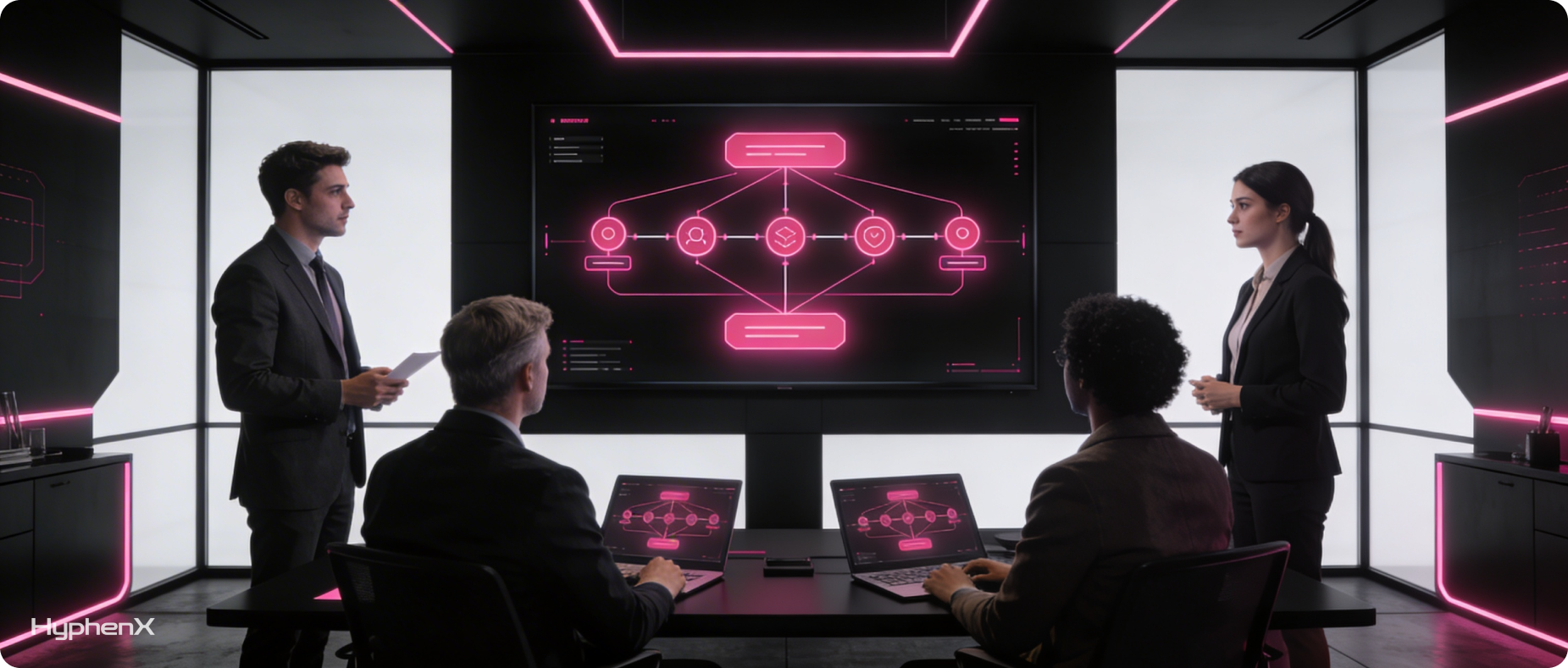
When a request enters Agentforce 3, the platform follows a structured multi-phase orchestration process that converts user input into accurate and context-aware responses through coordinated agent execution.
Task Analysis and Intent Recognition
The process begins with the Atlas Reasoning Engine analyzing the incoming request to identify key signals such as intent, topic, required actions, urgency, language, and user context. It interprets the request and determines the appropriate next step. For example, a message like “I didn’t receive my order” is immediately categorized as a delivery issue rather than a general query. Intent classification models then organize requests into defined categories and route them accordingly. At the same time, context-aware routing considers past interactions, user behavior, and session history to maintain consistency. This stage also determines task complexity and whether the request should be broken into smaller subtasks.
Intelligent Agent Selection and Routing
Once intent is established, the system assigns each task or subtask to the most suitable agent. This selection is based on capability fit, workload, and past performance. The Atlas Reasoning Engine evaluates agent definitions, instructions, and available actions to identify the best match.
Advanced routing methods also balance efficiency by distributing tasks across agents while prioritizing those with higher success rates. Semantic understanding ensures the system correctly interprets user input, while fallback mechanisms handle unexpected scenarios without disrupting the workflow.
Context Sharing Between Specialized Agents
For smooth collaboration, agents exchange only the necessary context required to complete their tasks. Most systems rely on structured context objects that include key fields such as customer details, intent, extracted data points, and resolution status.
In some cases, summarized context is used, where conversation details are compressed into shorter representations before being passed between agents. This reduces processing overhead while still maintaining relevant information across interactions.
Response Compilation and Delivery to Users
Real-World Multi-Agent Orchestration Use Cases
Organizations using the Agentforce multi agent platform are seeing measurable improvements across key business areas where coordinated agents streamline execution and reduce manual effort.
Customer Service Triage Across Multiple Departments
Contact centers using Agentforce are improving efficiency by reducing case handling time and automating a large share of routine service interactions. AI agents work together to handle tasks such as booking updates, billing changes, and status queries without requiring customers to repeat information. When escalation is needed, human agents receive full context, including conversation history and actions already taken, allowing them to continue the interaction without delay. Early implementations show strong operational gains. Teams are reducing time spent on call summaries and manual data entry, while voice-based automation handles a significant portion of repetitive service requests such as account queries and simple changes.
Sales Process Automation with Coordinated Agents
Sales teams are saving several hours each week by automating repetitive administrative work. Agents support outreach, follow-ups, and activity tracking, helping teams focus more on closing deals. Coordinated agents manage lead qualification using predictive scoring, update CRM records automatically after interactions, and assist in generating tailored proposals. Faster lead routing improves response time, which directly impacts conversion rates. In addition, opportunity monitoring helps identify stalled deals early, allowing teams to take action before risks affect pipeline outcomes.
Revenue Operations and Cross-Functional Workflows
Organizations aligning sales, marketing, and operations through coordinated agents are improving efficiency across the revenue cycle. Agents reduce delays between teams by automating lead handoffs, updating records in real time, and maintaining consistent data across systems. They also bring together data from CRM, communication tools, and analytics platforms into unified views, making reporting more reliable. By analyzing historical patterns and current pipeline activity, agents help teams identify risks, forecast outcomes, and keep deals moving forward.
Setting Up Multi-Agent Orchestration in Agentforce 3
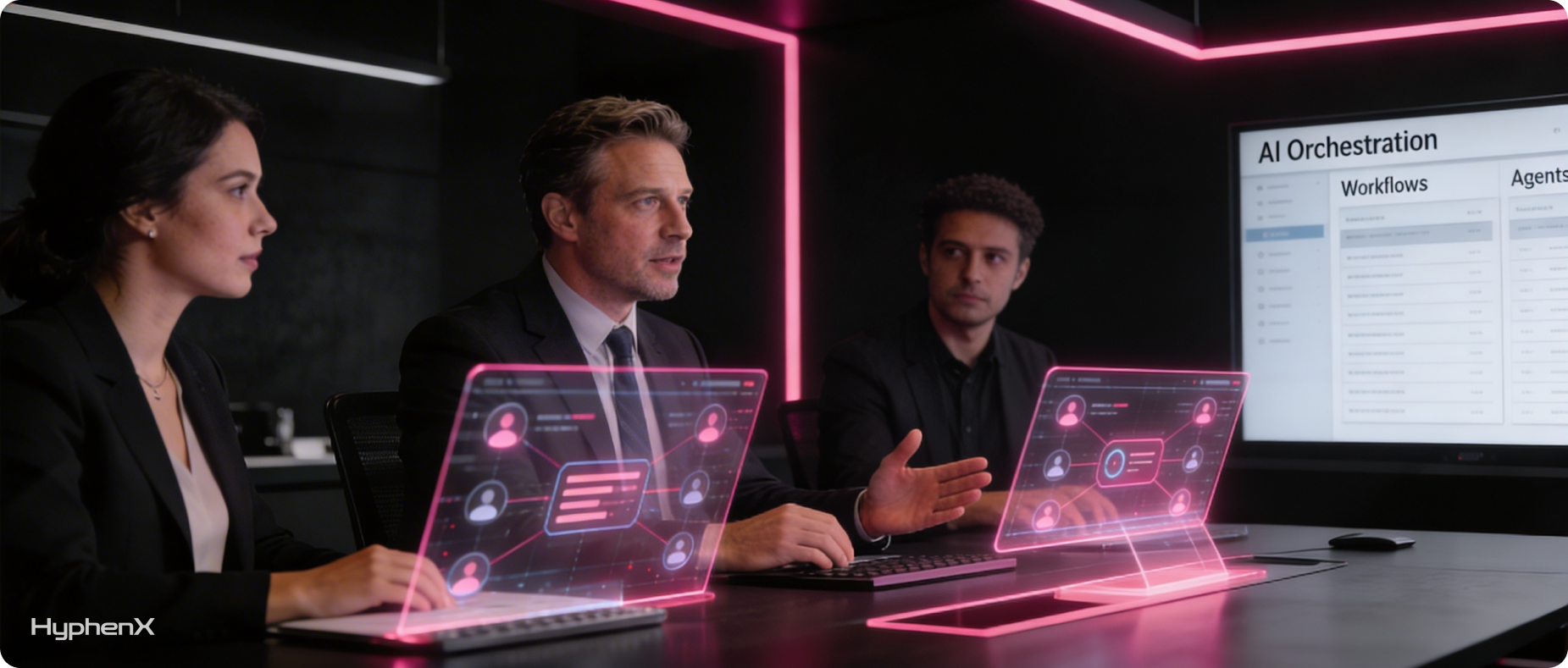
Building an effective multi-agent system involves a structured approach that turns Agentforce 3 from a platform into a working digital workforce.
Designing Your Primary Agent as the Entry Point
Begin by creating a primary agent in Agentforce Builder and defining it as the main interaction layer. Set clear instructions, roles, and available actions so Atlas can correctly interpret its capabilities. This agent receives user requests, identifies intent, and routes tasks to the right specialized agents while maintaining a consistent conversation flow.
Building Specialized Secondary Agents
Next, develop secondary agents focused on specific tasks or domains. Each agent should be connected to relevant data and configured with defined actions it can perform. These agents handle assigned tasks and return results to the primary agent. A structured approach, such as mapping key tasks or use cases, helps ensure each agent has a clear responsibility.
Configuring Agent Communication Protocols
Enable Agent2Agent communication to connect your system with internal and external AI services. The primary agent can securely delegate tasks using standardized communication methods, allowing seamless interaction across systems. Integration tools like MuleSoft help expose APIs and services in a way that agents can easily access and use.
Testing and Optimizing Agent Handoffs
Run controlled test scenarios to verify how agents interact and hand off tasks. When issues appear, trace them back to the specific step, refine the logic or instructions, and retest. Testing across different conversation paths ensures the system handles both expected and unexpected inputs reliably.
Monitoring Performance with Command Center Analytics
Use Agentforce analytics dashboards to track performance across all agents. Monitor metrics such as response time, usage patterns, and user feedback. Reviewing interactions by intent and outcome helps identify gaps, improve accuracy, and continuously refine agent performance.
Conclusion
Multi-agent orchestration can feel complex in the beginning, but Agentforce 3 makes it manageable with a structured and unified platform approach. The focus should be on setting up a strong primary agent first, then adding specialized agents based on clear business needs. The impact becomes visible quickly. Teams see faster resolution times, better handling efficiency, and smoother coordination across functions. The platform capabilities, setup approach, and real use cases together show how this model works in practice.
Start with a focused use case, track performance through Command Center, and expand gradually based on results. With the right setup, a multi-agent system can go live in a short time and begin delivering measurable improvements.