

What Salesforce staff augmentation means for an IT organization
Salesforce staff augmentation adds external specialists to an existing delivery team for a defined period or body of work. Those specialists usually work inside the organization’s established backlog, architecture standards, security controls, QA process, release cycle, and management structure.
The internal team keeps control of the Salesforce roadmap and decides which work gets priority. A product owner, program lead, delivery manager, architect, or another internal owner directs the work, answers business questions, reviews decisions, and accepts completed items. The augmented specialist contributes execution capacity or expertise within that structure.
That operating model separates augmentation from several other ways of resourcing Salesforce work.
Permanent hiring adds an employee who becomes part of the long-term organization. That can make sense when the capability will remain continuously needed and the company wants that knowledge retained internally.
Project outsourcing gives an external provider broader responsibility for delivering a defined scope or outcome. Consulting is often used when the organization needs help shaping requirements, architecture, operating decisions, or a delivery approach before execution begins. Managed services usually cover recurring operational responsibilities such as administration, support, monitoring, maintenance, or release ownership.
Staff augmentation keeps more day-to-day control with the client.
An engagement may involve one specialist, such as a Salesforce developer, QA engineer, architect, or MuleSoft engineer. It may also use an augmented pod containing several people who work within the same internal delivery structure.
The key prerequisite is internal delivery ownership. Someone inside the organization must be able to decide priorities, resolve questions, review work, and determine when work is acceptable. Without that ownership, adding external specialists can leave the same delivery problems in place while increasing coordination effort.
Choose between augmentation, hiring, consulting, and managed services
The staffing model should follow the type of responsibility IT wants to retain, the expected life of the requirement, and how clearly the work can be assigned. Duration alone cannot settle the choice. Leaders should also consider utilization, specialist depth, internal management capacity, knowledge retention, and who will remain accountable for delivery or operations.
1. Permanent hiring
Best fit: Permanent hiring suits Salesforce work with stable demand, continuing internal responsibility, and enough recurring workload to justify a long-term role inside the organization.
Internal responsibility: IT owns priorities, performance, technical direction, stakeholder coordination, delivery decisions, and the employee’s day-to-day contribution across the Salesforce roadmap.
Skill and duration: This model fits capabilities the organization expects to use consistently, especially when the role supports core platform operations, architecture, development, or business-process ownership.
Knowledge and accountability: Platform history, business context, technical decisions, and stakeholder knowledge stay directly inside the company. Delivery responsibility also remains with internal leadership.
2. Salesforce staff augmentation
Best fit: Salesforce staff augmentation suits defined capacity shortages or specialist requirements inside a delivery team that already has clear priorities and internal ownership.
Internal responsibility: Internal leaders continue to manage the backlog, technical direction, review process, approvals, business decisions, and final acceptance of completed Salesforce work.
Skill and duration: This model fits temporary workloads, project-phase demand, variable capacity needs, or specialist expertise required heavily for a limited period.
Knowledge and accountability: Critical knowledge should move into internal documentation, reviews, and paired work during delivery. Internal leaders remain responsible for directing and accepting the work.
3. Salesforce consulting or project delivery
Best fit: Salesforce consulting suits work that still requires discovery, architecture direction, solution design, delivery planning, or broader responsibility for a defined project.
Internal responsibility: Business leaders provide priorities, constraints, and approval decisions, while the provider may take responsibility for a larger workstream, deliverable, or agreed project scope.
Skill and duration: This model fits initiatives where specialist judgment is required to shape the solution, resolve technical questions, or establish the delivery approach before execution settles.
Knowledge and accountability: The provider may carry greater responsibility for agreed outputs. Documentation, technical decisions, and handover activity should preserve enough context for the internal team to support the result.
4. Managed services or a hybrid model
Best fit: Salesforce managed services suit recurring support and platform operations. A hybrid model suits programs that combine continuing internal ownership with temporary or specialist external support.
Internal responsibility: IT governs priorities, security, architecture, business decisions, and provider performance while external responsibility is assigned only to clearly defined service areas or workstreams.
Skill and duration: Managed services fit recurring operational work. A hybrid structure can combine permanent employees, augmented specialists, project teams, and ongoing service coverage based on each requirement.
Knowledge and accountability: Runbooks, documentation, decision records, ownership registers, and handover duties should identify where knowledge sits and who remains accountable for each part of the Salesforce environment.
Diagnose the Salesforce problem before choosing a staffing model
Before approving Salesforce staff augmentation, IT leaders should identify the exact point where Salesforce delivery slows down. Backlog growth can come from limited development capacity, weak requirements, unresolved architecture, testing delays, integration questions, approval queues, or release constraints. The staffing decision becomes clearer once the blocked stage and its cause are visible.
Step 1: Check development and requirement readiness
Start with the work entering the delivery team. Confirm that developers have enough executable work and that incoming requirements contain the detail needed for build activity.
Development capacity: Review whether qualified developers are fully occupied while approved and build-ready work continues to accumulate.
Requirement quality: Check business rules, acceptance criteria, dependencies, process details, and unresolved questions before assigning development work.
Step 2: Check architecture and integration direction
Technical work depends on timely design decisions. Review how architecture questions and integration dependencies are handled before bringing another specialist into the delivery flow.
Architecture direction: Confirm who approves solution designs, data models, technical exceptions, and changes that affect the wider Salesforce environment.
Integration design: Define system ownership, interfaces, security requirements, data movement, and upstream dependencies. Salesforce development services may support execution when those technical decisions are already established.
Step 3: Check QA and business validation
Development capacity has practical value when completed work can move through testing without creating another queue. Review both technical testing and business acceptance.
QA readiness: Check tester availability, regression coverage, test data, environment access, defect handling, and the time between development completion and testing.
UAT readiness: Confirm that business reviewers understand the acceptance criteria, have scheduled availability, and can resolve questions during validation.
Step 4: Check technical review and deployment
Review the path between completed development and a production-ready change. Delays here can make additional development capacity difficult to use.
Technical review: Check reviewer availability, code-review timing, architecture approval, security checks, and recurring reasons work returns for revision.
Deployment process: Review source control, environment movement, deployment ownership, approval stages, release dependencies, and failed deployment causes.
Step 5: Check what happens after release
Production pressure can quietly consume capacity intended for roadmap work.
Release management: Review scheduling, change approval, rollback preparation, dependencies, and ownership after deployment.
Production support: Examine incident volume, recurring administration, defect work, and support ownership. Persistent operational demand may point toward Salesforce managed services rather than extra project capacity.
Separate capacity, capability, clarity, and ownership gaps
After locating the blocked stage, classify the reason behind it. Salesforce staff augmentation can suit some delivery gaps immediately, while others require preparation before another specialist can contribute. Capacity, capability, clarity, and ownership each point to a different staffing decision.
| Gap type | What it looks like | Typical Salesforce situation | What may need to happen first | Staffing decision |
|---|---|---|---|---|
| Capacity gap | Qualified Salesforce people and clear work already exist, but available delivery hours cannot cover the current workload. | Enhancement queues, migration execution, regression testing, release preparation, or temporary platform support keep waiting. | Confirm the backlog is executable and that review, QA, and release processes can absorb more completed work. | Salesforce staff augmentation can fit when the workload is temporary or variable and internal delivery ownership already works. |
| Capability gap | The current team lacks expertise needed for a specific project, technical decision, or delivery phase. | Work slows around MuleSoft, architecture, advanced Apex or LWC, Revenue Cloud, Data 360, Agentforce, migration, DevOps, or specialist QA. | Check how long the skill will be needed and whether solution definition or architecture guidance is still required. | Temporary specialist demand can fit augmentation. Continuing demand may support hiring, while Salesforce consulting services may suit earlier design work. |
| Clarity gap | Available people cannot execute reliably because requirements, priorities, scope, or technical direction remain unsettled. | Stories return for clarification, acceptance criteria are incomplete, requirements keep changing, or technical questions interrupt delivery. | Complete business analysis, discovery, architecture decisions, backlog preparation, and stakeholder approvals before adding execution capacity. | Augmentation should be assessed after the work becomes stable enough for specialists to receive clear, executable assignments. |
| Ownership gap | Salesforce delivery lacks a person with enough authority to set priorities, approve decisions, and accept completed work. | Approvals wait, business questions remain unanswered, priorities compete, technical disputes stay open, or completed features lack acceptance. | Assign clear product, platform, delivery, architecture, security, and business decision rights inside the organization. | Establish internal ownership first. Project delivery may suit cases where broader responsibility for a defined outcome will sit with an external provider. |
Is your organization ready for Salesforce staff augmentation?

Salesforce staff augmentation works best when the internal delivery system can give external specialists clear work, timely decisions, safe access, and a reliable route to production. Before adding capacity, IT leaders should check whether ownership, backlog quality, technical direction, delivery controls, environments, and communication practices can support another contributor.
1. Internal ownership readiness
A Salesforce owner should have enough authority to keep work moving and settle business questions without prolonged escalation.
Ownership check: Confirm who controls priorities, accepts completed work, approves business decisions, and resolves competing requests.
Decision impact: Delayed ownership decisions can leave an augmented specialist waiting even when the technical work itself is clear.
2. Backlog readiness
The backlog should contain enough executable work for the specialist to contribute without repeatedly stopping for clarification.
Backlog check: Review priorities, requirements, acceptance criteria, dependencies, business rules, and unresolved questions before work is assigned.
Decision impact: Weak backlog preparation usually requires product ownership or business-analysis work before additional delivery capacity is useful.
3. Architecture readiness
External specialists need technical boundaries that explain how Salesforce changes should fit the wider platform and connected systems.
Architecture check: Confirm technical ownership, development standards, integration direction, existing technical debt, and the route for architecture decisions.
Decision impact: Unresolved design questions may require Salesforce consulting services or architecture support before execution begins.
4. Delivery and environment readiness
Another contributor increases the amount of work entering review, QA, deployment, and release processes.
Delivery check: Review code-review availability, QA capacity, sandboxes, repositories, documentation, development tools, credentials, and deployment access.
Decision impact: Existing review or release queues should be addressed before Salesforce staff augmentation adds more output.
5. Communication readiness
Embedded specialists need a predictable way to receive decisions, report blockers, document changes, and work with internal stakeholders.
Communication check: Set overlap expectations, meeting cadence, written documentation standards, escalation routes, and response ownership for delivery questions.
Decision impact: Clear communication rules reduce waiting time and keep technical decisions available to the wider Salesforce team after discussions end.
Where Salesforce staff augmentation fits across real project types
1. Sales Cloud and Service Cloud implementation
- Likely gap: Implementation teams may need additional build capacity when business processes, requirements, priorities, and solution direction are already approved.
- Capability required: Salesforce developers, administrators, QA specialists, or cloud-specific practitioners can support defined implementation work inside the existing team.
- Augmentation fit: Salesforce staff augmentation fits when internal owners control the backlog, business decisions, technical reviews, and acceptance.
- Prerequisite or alternative: Established product and architecture ownership should exist first. Salesforce consulting may suit programs that still need discovery or solution design.
2. Apex, LWC, and enhancement backlog development
- Likely gap: Enhancement queues often point to capacity pressure when approved stories remain waiting because qualified developers are already committed to current delivery work.
- Capability required: Apex and Lightning Web Component work may require developers who can follow existing coding standards, architecture decisions, testing rules, and review processes.
- Augmentation fit: Salesforce development services can support defined custom development when IT leaders have executable work and available technical reviewers.
- Prerequisite or alternative: Code review, QA, deployment, and backlog ownership need enough capacity to process added output. Persistent demand may support a permanent development role.
3. MuleSoft integration and data migration
- Likely gap: Integration and migration work can create specialist capability gaps around interface design, data mapping, transformation, validation, cutover preparation, or execution.
- Capability required: MuleSoft engineers, integration specialists, and migration practitioners need clear system ownership, source access, security rules, mapping decisions, and acceptance criteria.
- Augmentation fit: Temporary specialist support can fit once integration boundaries and migration decisions are established. Salesforce describes MuleSoft as a way to connect applications, APIs, data, and AI agents across enterprise environments. (salesforce.com)
- Prerequisite or alternative: Architecture or project-delivery support may come first when interfaces, ownership, or migration strategy remain unsettled. Defined technical work can then move into augmentation.
4. Revenue Cloud, Data 360, and Agentforce programs
- Likely gap: These programs can create capability pressure when internal teams lack product-specific knowledge or need temporary specialist support during a defined implementation phase.
- Capability required: Specialists may need experience with commercial processes, data sources, identity rules, access controls, AI use cases, testing requirements, and related Salesforce architecture.
- Augmentation fit: Salesforce staff augmentation can fit when use cases, ownership, technical boundaries, and acceptance conditions are already established for specialist execution.
- Prerequisite or alternative: Data and integration decisions need internal owners before build work starts. Salesforce describes connected Data Cloud data as a foundation used by Agentforce for contextual customer information. (salesforce.com)
5. QA, DevOps, release, and temporary platform support
- Likely gap: Release peaks, regression workloads, temporary support pressure, and administrator absence can create short-term capacity needs across the Salesforce delivery environment.
- Capability required: QA specialists, DevOps engineers, release practitioners, or administrators need established environments, access rules, escalation routes, documentation, and work ownership.
- Augmentation fit: Temporary specialists can support testing, release execution, deployment work, or platform coverage when internal teams retain priorities, approvals, and operational direction.
- Prerequisite or alternative: Continuing support demand may fit Salesforce managed services, while consistently utilized internal roles may support permanent hiring.
Evaluate duration, utilization, seniority, and total economic fit
The economic fit of Salesforce staff augmentation depends on how long the requirement lasts, how often the skill will be used, and how much judgment the work demands. IT leaders should also account for recruiting, onboarding, management time, knowledge transfer, external-resource cost, employment commitments, and delivery delays.
1. Evaluate the duration of the requirement
What to assess: Classify the work as temporary, tied to a project phase, variable across releases, recurring operational work, or a capability the Salesforce team expects to need continuously.
Salesforce example: Migration execution may create concentrated demand during mapping, validation, testing, and cutover. Continuous administration or platform ownership can create a lasting workload with no defined project endpoint.
Decision effect: A defined or changing requirement can support Salesforce staff augmentation. Consistent long-term demand gives IT leaders a reason to examine permanent hiring or an ongoing service model.
2. Examine expected specialist utilization
What to assess: Estimate how much suitable work the specialist will actually receive during each project phase. Look at workload frequency, dependency timing, decision points, release cycles, and periods where the skill may sit unused.
Salesforce example: Architecture support may be concentrated around solution design and major technical decisions. Migration expertise may peak around data preparation and cutover, while QA capacity can rise during larger regression cycles.
Decision effect: Fractional or phase-based specialist support can make sense when utilization changes across the program. Continuous operational demand may fit Salesforce managed services when IT wants defined external responsibility.
3. Match seniority to decision complexity
What to assess: Determine whether the work requires execution against established standards or senior judgment across architecture, integrations, data design, security, technical risk, and cross-platform decisions.
Salesforce example: Several mid-level developers cannot automatically cover an architecture gap. Salesforce describes architects as professionals who assess technical tradeoffs and communicate complex solution decisions to stakeholders and executives. (salesforce.com) (salesforce.com)
Decision effect: Senior specialists can work fractionally when complex decisions occur at specific stages. Routine configuration or repetitive ticket work should usually be assigned at a level that matches the actual technical demands.
4. Calculate the total economic fit
What to assess: Compare recruiting effort, onboarding, expected utilization, internal management time, knowledge transfer, external-resource cost, employment commitments, delivery delays, and unused specialist capacity.
Salesforce example: A short integration phase can require expertise that the internal team rarely uses afterward. A permanent role can make more sense when the same capability carries stable workload and long-term platform responsibility.
Decision effect: Compare the full operating requirement before choosing a model. Salesforce consulting services may fit work requiring broader solution guidance, while augmentation suits defined work managed by the internal delivery team.
Test governance, QA, security, and release readiness
Salesforce staff augmentation adds work to an existing delivery system, so governance must be able to process that work without creating new queues. IT leaders should confirm who owns priorities, architecture approval, technical review, escalation, definition of done, and release approval. QA also needs enough capacity for functional testing, regression coverage, defect handling, and business validation. Business users should validate process outcomes, while technical QA remains part of the delivery path. If reviews or testing already delay completed work, those constraints need attention before Salesforce staff augmentation adds more development output.
Security and release controls need the same level of preparation. External specialists should receive access based on their assigned work, with sandbox permissions, production access, contractor identities, integration identities, sensitive-data handling, and access removal governed through internal policy. Salesforce recommends applying the principle of least privilege when granting access. Release readiness should cover source control, deployment pipelines, environment strategy, release calendars, change review, and rollback planning. Salesforce has also discussed using DevOps Center to provide greater visibility and control across release workflows. An organization with recurring operational pressure may also assess Salesforce managed services when release or support responsibility needs continuing coverage.
Decide what ownership must remain inside the organization
| Internal ownership area | What must remain accountable internally | How external specialists can contribute |
|---|---|---|
| Roadmap and product ownership | Internal leaders should control the Salesforce roadmap, business priorities, backlog order, budget authority, and final acceptance of delivered work. | Specialists can estimate work, refine requirements, identify dependencies, and provide technical input while the internal product owner keeps decision authority. |
| Architecture and integration ownership | The organization should retain clear decision rights for platform architecture, integration boundaries, data movement, technical standards, and accepted technical debt. | External architects and engineers can assess designs, document tradeoffs, map integrations, and support technical decisions through Salesforce consulting services. |
| Security and production ownership | Authorized internal owners should approve production access, security exceptions, sensitive-data use, integration identities, deployment permissions, and production changes. | Specialists can prepare releases, provide technical evidence, conduct checks, and work within approved access. Salesforce guidance also supports limiting privileges to the access required for assigned work. |
| Business-process knowledge | Long-term knowledge of sales, service, approval flows, customer processes, platform dependencies, and business rules should remain accessible to the internal team. | External specialists can maintain configuration notes, technical documentation, integration maps, recorded walkthroughs, and runbooks while pairing with internal staff during delivery. |
| Knowledge and transition ownership | Internal leaders should know who owns architecture records, release procedures, unfinished work, repositories, documentation, and operational responsibilities after the engagement. | Specialists can update the ownership register, transfer work during regular reviews, document decisions as they occur, and complete handover activity throughout the engagement rather than leaving it until departure. |
Know when Salesforce staff augmentation is the wrong choice
Salesforce staff augmentation depends on clear work, internal decision ownership, working delivery controls, and a requirement that fits embedded specialist support. IT leaders should test these conditions in sequence before approving an engagement. A failure at an early phase can change the delivery model before additional resources enter the Salesforce program.
Phase 1: Confirm that the work is defined
Start with project goals, requirements, scope, priorities, acceptance criteria, and known dependencies. External specialists need assignments that are stable enough to execute without repeatedly waiting for basic business decisions.
Poor-fit signal: Discovery is incomplete, requirements change continuously, priorities remain disputed, or the team cannot define what completed work should achieve.
Direction: Use discovery, business analysis, Salesforce consulting, or project-definition support until the work becomes executable.
Phase 2: Confirm internal ownership and technical direction
A named internal owner should control priorities, approvals, business decisions, and final acceptance. Technical questions also need a known route through architecture and engineering leadership.
Poor-fit signal: Nobody can consistently approve requirements, settle technical disputes, accept delivered work, or decide between competing priorities.
Direction: Strengthen product ownership, platform governance, architecture authority, or the wider operating model before adding embedded Salesforce specialists.
Phase 3: Check whether delivery controls can absorb more output
Additional development capacity creates more work for reviewers, QA teams, release managers, and business validators. Those functions need available capacity before delivery volume increases.
Poor-fit signal: Code reviews remain queued, QA is overloaded, UAT waits for business availability, or completed work routinely misses releases because approvals and deployment processes are blocked.
Direction: Repair the review, testing, DevOps, or release constraint first. Extra build capacity has limited value while downstream work remains congested.
Phase 4: Test security, access, and knowledge-retention conditions
Specialists need appropriate access to sandboxes, repositories, tools, connected systems, and required data. Critical Salesforce knowledge also needs a clear route back into the internal organization.
Poor-fit signal: Required access cannot be granted under internal policy, production permissions cannot be controlled safely, or essential architecture and integration knowledge would remain with one external person.
Direction: Resolve access design, documentation ownership, internal pairing, and knowledge-transfer responsibilities before the engagement begins.
Phase 5: Decide whether the requirement belongs in another operating model
Examine how long the work will continue and who should carry responsibility after the immediate requirement is completed.
Poor-fit signal: The capability will be used continuously, the role belongs permanently inside the Salesforce organization, or IT wants a provider to own recurring platform operations or an entire project outcome.
Direction: Permanent hiring may fit enduring internal capability. Salesforce managed services may fit continuing operational responsibility. Consulting or project delivery may fit work where external accountability covers a defined implementation or outcome.
Use an executive decision scorecard before approving augmentation
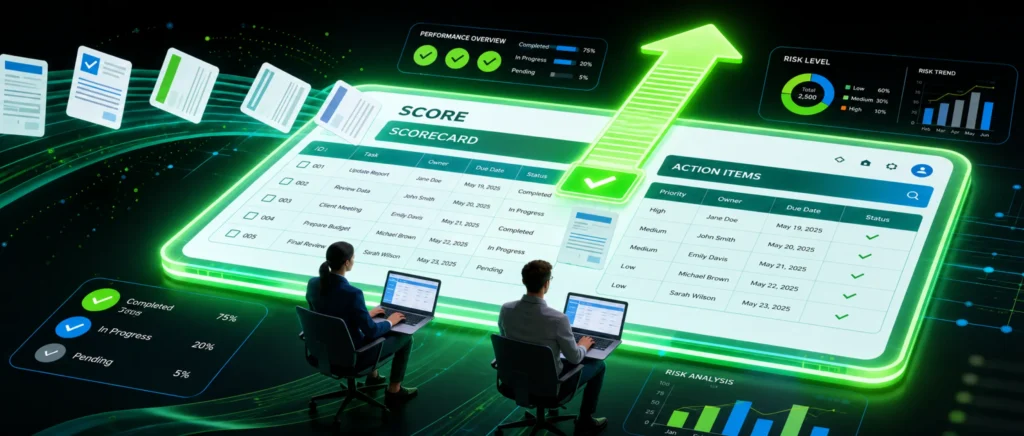
Before approving Salesforce staff augmentation, IT leaders can review the requirement across delivery, ownership, technical, operational, and knowledge conditions. The scorecard should produce a decision direction rather than a numerical total. A weak result in ownership, security, QA, or release readiness can outweigh several positive staffing signals.
| Decision area | What leadership should confirm | Signal supporting augmentation | Signal that changes the decision |
|---|---|---|---|
| Work clarity and backlog maturity | Requirements, priorities, acceptance criteria, dependencies, and expected outcomes are usable | Specialists can receive executable work without repeated clarification | Discovery, business analysis, or backlog preparation is still required |
| Internal ownership | A named owner can prioritize, approve, resolve blockers, and accept completed work | Day-to-day direction remains inside the organization | Missing authority should delay augmentation |
| Technical leadership | Architecture decisions, technical standards, escalation routes, and review ownership are established | Specialists can work inside known technical boundaries | Unresolved architecture may require advisory or consulting support |
| Capability and capacity need | The missing skill or workload shortage can be identified clearly | Temporary capacity pressure or a defined specialist gap exists | The problem comes from unclear work, weak ownership, or another process constraint |
| Duration and utilization | Leadership understands how long the skill is needed and how consistently it will be used | Demand is temporary, variable, phase-based, or specialist | Stable long-term utilization may support permanent hiring |
| Architecture and integration complexity | Interfaces, system ownership, data movement, technical dependencies, and decision rights are understood | Specialists can execute against established architecture | Unresolved system boundaries or design questions require earlier technical work |
| Data and security readiness | Required access can be granted within policy and sensitive data can be handled appropriately | Identity, sandbox, repository, and production controls are prepared | Unsafe or unresolved access conditions should stop approval |
| QA and review capacity | Testers and technical reviewers can process additional output | New work can move through review and validation without creating another queue | Existing review or QA congestion should be corrected first |
| Release maturity | Source control, deployment processes, environments, approvals, rollback procedures, and release ownership function reliably | Completed work has a usable route into production | Weak release controls reduce the value of added delivery capacity |
| Knowledge-transfer readiness | Documentation, internal pairing, architecture records, runbooks, and ownership are planned during delivery | Critical knowledge can remain accessible after the engagement | Dependency on one external specialist creates long-term delivery risk |
Outcome A: Strong augmentation candidate
The requirement is clear, an accountable internal owner exists, and IT can identify a temporary capacity shortage or specialist capability gap. Technical review, QA, security, and release processes have enough capacity to support the work. Knowledge transfer is planned as part of delivery.
Outcome B: Conditional augmentation candidate
The staffing requirement is identifiable, but readiness work remains. Typical issues include incomplete acceptance criteria, delayed technical review, weak access preparation, overloaded QA, unresolved architecture questions, or incomplete knowledge-transfer ownership. Correct the blocking condition before adding external capacity.
Outcome C: Another engagement model fits the requirement better
Permanent hiring can suit a continuously utilized internal capability. Salesforce consulting services can suit unresolved scope, architecture, or project responsibility. Managed services can suit continuing platform operations. A hybrid structure can combine permanent internal ownership with temporary specialist support where different workstreams have different needs.
At HyphenX, the decision starts with the delivery constraint and the operating conditions around it. Salesforce staff augmentation makes sense when IT can direct the work, absorb the output, retain critical knowledge, and point to a specific capacity or capability requirement.
Frequently Asked Questions
When should a company use Salesforce staff augmentation?
Use Salesforce staff augmentation when the work is clear, internal ownership exists, and the organization has a temporary capacity or specialist capability gap. QA, review, security, and release processes should also be ready to absorb additional delivery work.
What problems can Salesforce staff augmentation solve?
It can help with growing backlogs, specialist skill gaps, migration work, integration requirements, QA pressure, release support, temporary platform coverage, and short project-phase workloads where internal teams need added execution capacity.
When should an IT leader avoid Salesforce staff augmentation?
IT leaders should avoid augmentation when requirements remain unclear, ownership is weak, architecture decisions are unresolved, QA or review queues are blocked, release processes are unstable, or safe access cannot be provided.
How is Salesforce staff augmentation different from managed services?
Staff augmentation places external specialists inside the client’s delivery structure. Internal leaders keep control of priorities and day-to-day work. Managed services assign an external provider responsibility for a defined ongoing operational function.
How is staff augmentation different from hiring permanent Salesforce employees?
Permanent employees become part of the long-term internal team and can retain platform knowledge over time. Augmented specialists usually support a defined requirement, workload, project phase, or capability gap without creating a permanent role.
When is Salesforce consulting a better choice than staff augmentation?
Salesforce consulting fits when scope, requirements, architecture, or delivery direction still need to be defined. It can also suit projects where leadership wants broader external responsibility for a defined implementation or business outcome.
Can Salesforce staff augmentation work for long projects?
Yes. A long engagement can work when internal ownership stays clear, specialist utilization remains strong, the work is well defined, and knowledge transfer happens throughout delivery. Permanent hiring should be reviewed when the capability becomes continuously required.
Which Salesforce skills are commonly augmented?
Common areas include Apex and LWC development, MuleSoft, architecture, migration, QA, DevOps, Revenue Cloud, Data 360, Agentforce, administration, integration work, and release support. The role should match the diagnosed delivery gap.
How do I know whether we have a capacity problem or a capability problem?
A capacity problem exists when the right skills already exist internally but available people cannot complete all ready work. A capability problem exists when the team lacks specific expertise required for the project or delivery phase.
What internal roles are needed before bringing in augmented Salesforce resources?
A named product or platform owner should control priorities and acceptance. Technical work also needs architecture or senior technical decision support, plus clear QA, security, release, and business responsibilities where approvals affect delivery.
How should IT leaders measure whether augmentation is working?
Measure progress against the original constraint. Useful signals include backlog movement, review delays, defect volume, release throughput, blocked work, specialist utilization, stakeholder acceptance, and knowledge-transfer progress across the engagement.
How should a company exit a Salesforce staff augmentation engagement?
Plan the exit during delivery. Keep architecture records, integration maps, runbooks, configuration notes, release procedures, and technical documentation current. Pair external specialists with internal staff and transfer unfinished work to named owners before access is removed.