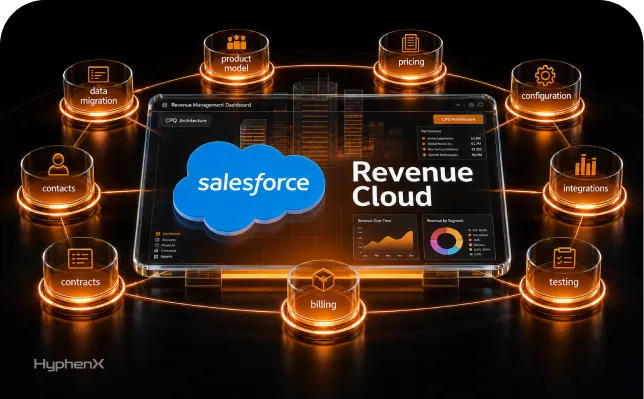

A Salesforce setup built around property sales
Real estate teams handle high lead volume, long buying cycles, project changes, partner submissions, site visits, document steps, payment questions, and post-booking requests. Separate inboxes and spreadsheets break that history into pieces. Salesforce CRM for real estate gives authorised users a shared record of confirmed activity, pending work, and responsibility.
HyphenX Solutions plans Salesforce for real estate implementation around the way your organisation sells and supports property. We map direct sales, broker channels, project teams, finance touchpoints, and customer relations before we configure the platform. A Salesforce implementation partner should make record ownership and handoffs clear before development begins.
Our work can cover a new Salesforce org, a replacement for an older CRM, a repair programme for an existing setup, or a phased expansion into portals, service, analytics, and Agentforce. The scope follows business priorities, user readiness, data condition, and the systems that must remain the source for inventory or finance records.
Who we support
- Residential developers managing several projects, phases, towers, and sales teams.
- Commercial property firms tracking leasing enquiries, tenant relationships, and renewals.
- Broker networks and agencies handling direct, partner, and referral leads.
- Property management teams coordinating owners, tenants, inspections, and service requests.
- Real estate investment and asset teams that need reliable relationship and activity records.
What our Salesforce real estate consulting covers
Our Salesforce real estate consulting starts with workshops, record review, and a practical release plan. We document how an enquiry enters the business, who owns it, which information is required, what triggers the next step, and where managers need an exception report. This gives the build team a checked process rather than a loose feature list.
Service area | What we handle |
|---|---|
Discovery and CRM planning | Process workshops, scope definition, product selection, business case, release plan, acceptance rules, and governance. |
Sales Cloud setup | Lead capture, duplicate handling, assignment, qualification, opportunities, activities, site visits, forecasts, and manager reports. |
Partner and broker portals | Partner registration, project access, submitted leads, ownership review, visit records, deal status, and controlled document access. |
Service Cloud setup | Buyer requests, possession cases, complaints, document queries, queues, service levels, escalations, and case reporting. |
Marketing and nurture | Campaign source tracking, consent, audience groups, enquiry follow-up, visit reminders, event communication, and response reporting. |
Data and system connections | Website forms, property portals, telephony, messaging, inventory, ERP, payment, document, and identity tools. |
Migration and data repair | Field mapping, duplicate policy, buyer matching, archive rules, test loads, reconciliation, ownership, and access checks. |
Analytics and ROI | Executive scorecards, project reports, broker activity, response time, visit conversion, user adoption, saved effort, and cost review. |
Agentforce use cases | Enquiry questions, appointment support, record summaries, case classification, partner assistance, and approved follow-up drafts. |
Support after launch | Administration, release checks, backlog handling, user support, training, report changes, and planned next phases. |
Core capabilities for real estate teams

Lead capture, qualification, and assignment
We connect enquiry forms and approved lead sources with Salesforce so every record carries its source, campaign, project interest, consent, and submission time. Duplicate rules compare email addresses, phone numbers, and existing buyer records before another profile is created.
Assignment can use project, location, budget, configuration, language, source, buyer type, or team availability. Each enquiry receives an owner, response deadline, status, and next task. Managers can see untouched leads, overdue actions, repeated owner changes, and queues that need intervention.
Salesforce CRM for real estate also supports one buyer profile across several project interests. A buyer can change location, budget, unit type, or purchase timing while the earlier conversation remains visible to the next authorised user.
Buyer profiles and opportunity management
We design buyer records around the details that sales teams use during real conversations. These can include preferred location, budget, configuration, purchase purpose, financing need, move-in timing, family involvement, project questions, communication consent, and earlier site visits.
Opportunity stages should match the organisation’s sales process. We define stage entry rules, required fields, exit criteria, approval points, ageing rules, and reasons for delay or loss. Managers then receive a pipeline based on consistent definitions rather than personal judgement.
Our consulting work also documents when an enquiry becomes an opportunity, when an inactive buyer returns to nurture, and when another project interest should remain under the same contact record. These rules reduce duplicate work and give reporting a common base.
Site visits, unit interest, and quotations
Site-visit records can include the buyer, project, date, assigned representative, attendance, feedback, preferred unit, objections, family response, and next action. The record should show whether a visit was booked, completed, cancelled, or rescheduled and why.
Sales teams may need current project, tower, floor, configuration, size, facing, and unit status. We can bring approved information into Salesforce from a property inventory or ERP platform. The source system remains responsible for final availability and price records.
Quotation and offer workflows can record the approved price version, validity date, discount request, reviewer, and outcome. Permission rules restrict who can change commercial fields. Audit history gives managers a dated record of sensitive changes.
Broker and channel partner management
Broker programmes need clear partner registration, project permissions, lead submission rules, ownership checks, visit records, and attribution decisions. Experience Cloud can provide a branded partner site where approved users access selected CRM records and current sales material.
We configure duplicate review so a partner submission can be compared with website, campaign, referral, call, and walk-in records. The reviewer sees first enquiry date, recent activity, partner submission time, project interest, and the organisation’s written ownership rule.
A real estate CRM implementation can also record partner approval status, project access dates, training completion, document versions, booking attribution, invoice status, and commission references. Final commission calculations should remain in the authorised finance system.
Marketing, communication, and lead nurture
Property buyers may take weeks or months to decide. We connect campaign source, project interest, consent, communication history, and sales stage so follow-up reflects what the buyer has already discussed. Campaigns can support launches, open-house events, project updates, document reminders, and inactive-lead nurture.
Email, SMS, and approved messaging connections can record delivery, replies, appointment changes, and the next required task. Communication rules should follow consent, frequency, business policy, and local legal requirements.
Salesforce CRM for real estate gives marketing and sales one agreed source for campaign response and buyer movement. Reports can compare enquiry volume with first contact, qualification, visits, bookings, and long-term nurture outcomes.
Booking, finance, possession, and service
The buyer relationship continues after unit selection. Salesforce can display approved booking references, document status, loan progress, agreement steps, payment milestone references, possession tasks, snagging records, handover work, and service cases.
Finance and ERP platforms should remain responsible for balances, receipts, tax records, invoices, and accounting entries. Salesforce can show checked status fields and references for authorised sales or service users without becoming the financial ledger.
Service Cloud can route possession questions, complaints, maintenance requests, document queries, and other cases to the correct team. Queues, service levels, escalation paths, knowledge, and case history give customer relations a clear working record.
Agentforce and AI use cases
Agentforce can assist with defined work that uses approved records and actions. Suitable starting points include answering routine project questions, collecting qualification details, suggesting visit times, preparing call summaries, drafting follow-ups, classifying service requests, and helping partners find approved material.
We set boundaries for pricing, unit commitments, agreements, payment disputes, complaints, and unusual requests. These cases move to an authorised employee. Every AI-assisted process needs checked source data, permissions, test scenarios, activity records, and a named business owner.
Salesforce for real estate implementation should introduce AI after the underlying records and processes are dependable. The first Agentforce use case should have a narrow task, a clear handoff, an approved knowledge source, and a measure such as response time, handling effort, or appointment completion.
Systems we can connect with Salesforce
A property CRM often depends on information held across several platforms. We define the source system, update direction, timing, access rule, error queue, and owner for every connection. The Salesforce platform can then display the information each role needs without creating competing versions of the same record.
|
Service area |
What we handle |
|---|---|
|
Lead sources |
Corporate websites, project forms, property portals, campaign forms, events, referrals, walk-ins, and broker submissions. |
|
Communication |
Business email, cloud telephony, diallers, SMS providers, approved messaging tools, calendars, and meeting platforms. |
|
Property systems |
Project master records, unit inventory, reservation platforms, site-visit tools, quotation systems, and sales applications. |
|
Business systems |
ERP, finance, payment gateways, loan coordination, KYC, electronic signature, and document repositories. |
|
Customer service |
Support inboxes, case platforms, possession trackers, maintenance tools, survey systems, and knowledge sources. |
|
Data and analytics |
Data 360, CRM Analytics, approved warehouses, reporting tools, and external data sources needed for selected use cases. |
Our implementation team can use Salesforce APIs, MuleSoft, middleware, platform events, batch jobs, or scheduled files depending on record volume, timing, security, and the capability of the connected system. Each method is tested for failed, delayed, duplicate, and partial updates.
Data migration and record quality
A real estate CRM implementation can stall when buyer records have duplicate profiles, incomplete contact details, conflicting project names, missing consent, and unclear owners. We assess source files before build decisions depend on them.
- Create a field map for buyers, projects, units, partners, visits, bookings, activities, and service records.
- Set duplicate and matching rules for email, phone, external IDs, partner submissions, and historical records.
- Name the source owner and migration decision for every field that enters Salesforce.
- Run test loads, record counts, sample checks, exception review, and rollback planning before production migration.
- Classify personal, financial, legal, and commercial records before access is assigned.
- Keep data that has no business or legal purpose outside the production migration set.
We document the records moved, transformed, merged, archived, rejected, or left in the source platform. Business owners approve reconciliation results before users begin daily work.
Security, permissions, and audit controls
Property records can contain personal details, financial references, agreements, broker information, and sensitive complaints. We design object, field, record, and external-user access around job duties. Profiles, permission sets, roles, sharing rules, queues, and Experience Cloud access work together to limit visibility.
A sales representative may need buyer and visit records for assigned projects. A project head may need wider pipeline access. Finance may see approved payment references. Partner users should see only permitted projects and records. Service teams require the context for cases without broad access to commercial or financial data.
We also plan audit history, integration users, authentication, session rules, sandbox access, deployment controls, and review dates. Security decisions are tested with real role scenarios before launch.
Our Salesforce for real estate implementation process

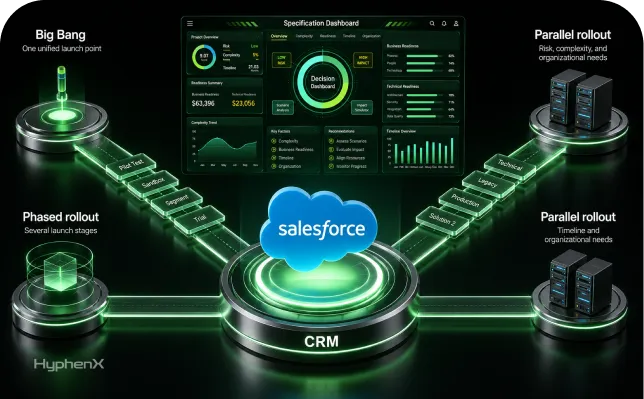
We use phased delivery so business owners can review process, records, data, security, and user readiness before the next group of work begins. The plan changes with project size, but the approval logic stays consistent.
| Phase | Work completed | Client output |
|---|---|---|
| 1 | Discovery workshops, current-process review, lead-source mapping, stakeholder interviews, pain-point evidence, and first-release boundaries. | Approved scope, business goals, current-state map, risk register, and delivery plan. |
| 2 | Buyer, project, unit, partner, visit, booking, activity, and service record design with field definitions and ownership. | Data model, field dictionary, permission matrix, reporting definitions, and system ownership map. |
| 3 | Salesforce configuration, selected custom work, automation, portals, reports, and approved system connections. | Configured sandbox, technical notes, build log, and demonstration against signed requirements. |
| 4 | Migration trials, integration tests, security tests, duplicate scenarios, user acceptance, volume checks, and correction cycles. | Test evidence, issue log, reconciliation report, user approval, and production release checklist. |
| 5 | Role-based training, launch communication, production release, early support, and daily exception review. | Live system, trained users, support route, administrator handover, and adoption baseline. |
| 6 | 30-day and 60-day reviews covering usage, data quality, overdue work, conversion movement, user feedback, and backlog. | Measured results, corrective work, next-phase decision, and updated CRM roadmap. |
During delivery, our consulting team keeps a decision register for scope requests, business reasons, cost effects, timing effects, approvers, and dates. This protects both the client and the delivery team from hidden work.
Choose a Salesforce implementation partner that can explain what belongs in configuration, what needs custom development, what should remain in another system, and how each decision will be tested. HyphenX Solutions documents those boundaries before release approval.
Adoption, reporting, and return on investment
CRM return depends on daily behaviour. Login totals alone do not show whether users enter the required records, complete follow-ups, maintain stages, or use reports. We track weekly active users, required-field completion, overdue tasks, dashboard use, duplicate rates, work completed outside Salesforce, and manager review habits.
Business measures should match the first-release goal. Lead-management work can track first-response time, contact rate, qualification rate, visit booking, attendance, and booking movement. Broker work can track review time, duplicate disputes, accepted submissions, visit completion, and attribution approval. Service work can track case volume, response time, open age, and repeated contact.
Real estate CRM implementation ROI should include platform fees, delivery, internal staff time, training, support, and future maintenance. Benefit lines can include additional gross contribution from improved conversion, saved sales or administrative hours, fewer duplicate-handling tasks, lower report preparation effort, and reduced service rework.
| Measure | Baseline and target | Evidence source |
|---|---|---|
| First-response time | Current median compared with the 30-day and 60-day target | Lead timestamps, call records, and task completion |
| Visit conversion | Qualified enquiries that schedule and attend a site visit | Lead, opportunity, and visit records |
| Broker review time | Time from partner submission to ownership decision | Partner submission and approval history |
| User adoption | Required work completed inside Salesforce by role | Usage, field completion, tasks, and report access |
| Saved effort | Hours removed from copying, reconciliation, and report preparation | Time study approved by business owners |
| Commercial return | Measured benefit compared with annualised platform and delivery cost | Finance-approved contribution and cost records |
Salesforce reported in May 2026 that Tata Realty reduced first-response time to 8 hours and recorded gains in conversion and lead qualification after its Agentforce deployment. Client results depend on process, data, scope, adoption, and market conditions, so we set targets from the client’s own baseline.
Engagement models
| Service area | What we handle |
|---|---|
| Assessment and roadmap | A short discovery engagement for scope, architecture, product fit, data readiness, cost ranges, risks, and release planning. |
| Fixed-scope delivery | Suitable when requirements, users, systems, and acceptance tests are settled before the build begins. |
| Phased programme | Suitable for multi-project or multi-cloud work released by buyer path, team, geography, or business unit. |
| Time and materials | Suitable when priorities may change and the client needs a flexible backlog with regular budget review. |
| Managed support | Ongoing administration, user support, release work, backlog delivery, reporting changes, and platform checks after launch. |
| Dedicated team | A HyphenX team working with client product owners, architects, administrators, and business leads for a longer programme. |
Why work with HyphenX Solutions
HyphenX Solutions focuses on Salesforce consulting, implementation, integration, portals, support, and AI work. Our Salesforce real estate consulting approach connects technical decisions with buyer movement, sales ownership, partner rules, service handoffs, and reporting needs.
- We define the business process and source systems before configuration begins.
- We separate standard Salesforce configuration from custom work and document the maintenance effect.
- We plan user roles, security, migration, testing, training, and support as part of delivery.
- We use phased approvals so data or scope problems are found before production release.
- We measure adoption and business outcomes after launch instead of closing the project at go-live.
- We can continue with administration, support, integration work, and later releases when the client needs them.
As your Salesforce implementation partner, we provide process maps, field definitions, permission plans, test evidence, training material, technical notes, and administrator handover. The client keeps a clear record of what was built and how it should be managed.
Frequently asked questions
- What is Salesforce for real estate implementation?
Salesforce for real estate implementation is the planning, configuration, migration, connection, testing, training, and launch work required to support property sales and service processes in Salesforce. The scope may cover enquiries, buyers, brokers, visits, bookings, possession, cases, reports, and connected business systems. - How is Salesforce CRM for real estate configured?
Salesforce CRM for real estate is configured around the organisation’s record model and working rules. Consultants define buyer, project, unit, partner, visit, booking, and service records, then configure access, assignments, automation, reports, portals, and system connections required by each role. - What does Salesforce real estate consulting include?
Salesforce real estate consulting can include process review, product selection, scope planning, architecture, data assessment, security design, release planning, cost review, ROI measures, and delivery governance. It should give the build team clear requirements, owners, acceptance tests, and decisions about connected source systems. - How long does a real estate CRM implementation take?
A real estate CRM implementation schedule depends on release scope, data condition, user count, approvals, custom work, portals, and system connections. A focused lead-management release may take several weeks, while a multi-project programme with inventory, ERP, finance, service, analytics, and AI can require several phases. - Why use a Salesforce implementation partner for real estate?
A Salesforce implementation partner can connect platform decisions with property sales operations, data ownership, partner rules, security, migration, testing, and user adoption. The partner should document the work, state assumptions, explain maintenance needs, and provide evidence before production approval. - Can Salesforce handle direct and broker leads together?
Yes. Salesforce can record direct, campaign, referral, walk-in, and broker enquiries under controlled rules. Duplicate checks and dated activity can support ownership review. A named reviewer should apply the organisation’s written policy before booking attribution or partner credit is confirmed. - Can brokers receive a Salesforce portal?
Experience Cloud can provide approved brokers with a branded site for registration, lead submission, project access, sales material, visit records, and deal status. Permissions must restrict each user to approved records, projects, documents, and actions. Commercial approvals remain with authorised internal teams. - Can Salesforce connect with property inventory and ERP systems?
Yes. Salesforce can exchange approved data with inventory, ERP, finance, payment, document, telephony, messaging, and other platforms. Each connection needs a source owner, update rule, access policy, failure queue, reconciliation process, and technical owner. Final inventory and accounting records should stay in their authorised systems. - How does Salesforce support site visits?
Salesforce can record the buyer, project, appointment time, representative, attendance, feedback, unit interest, objections, and next action for each visit. Reminders, rescheduling, manager reports, and post-visit follow-up can use the same record when the process and permissions are configured. - Can Agentforce answer property enquiries?
Agentforce can answer routine questions from approved project information and can collect qualification details, support appointment scheduling, prepare summaries, or route requests. Pricing, unit commitments, agreements, payment disputes, complaints, and unusual cases should move to authorised employees under defined handoff rules. - What data should be prepared before migration?
Prepare buyer and contact records, consent fields, projects, units, partners, lead sources, activities, visits, opportunities, booking references, service records, and external IDs. Identify duplicates, missing values, conflicting names, inactive records, owners, retention rules, and access classifications before test loads begin. - How is access to buyer and finance data controlled?
Salesforce supports object, field, and record access through profiles, permission sets, roles, sharing settings, queues, and external-user permissions. The security plan should map each job role to the records and actions it needs, then test those permissions with realistic buyer, project, partner, finance, and service scenarios. - How is CRM adoption measured after launch?
Adoption can be measured through active users, required-field completion, overdue tasks, stage accuracy, dashboard use, duplicate rates, work completed outside Salesforce, and manager review. These measures should be compared at 30 and 60 days with the business outcomes selected during discovery. - How do real estate firms calculate Salesforce ROI?
Calculate annual benefit from measured conversion movement, saved work hours, reduced duplicate handling, faster reporting, and lower service rework. Compare that benefit with licences, delivery, internal staff time, training, support, and maintenance. Finance should approve the baseline, assumptions, evidence, and review period. - Can HyphenX support Salesforce after go-live?
Yes. HyphenX can provide administration, user support, report updates, release checks, backlog delivery, integration monitoring, training, data reviews, and later implementation phases. The support model can use a monthly scope, a dedicated team, or planned work packages based on the client’s operating needs. - Talk with a real estate Salesforce consultant
Your first discussion can cover current lead sources, sales stages, broker rules, projects, systems, data quality, user groups, reporting gaps, and the business result expected from release 1. We will use that information to frame scope, risks, work packages, and the next decision.