
A brokerage sells other people’s property. A developer sells its own, one unit at a time, from a fixed and shrinking supply, through a broker network it does not employ, against a construction schedule it does not fully control. Those differences change what the CRM has to do. This guide covers how builders and developers actually run on Salesforce, from lead source to possession, and what to build in which order.
1. Why A Developer’s CRM Problem Is Not A Brokerage’s
Most published guidance on real estate technology is written for brokerages and agents. It assumes an open market with many listings, buyers who can be shown alternatives, and a commission that arrives at closing. A developer operates under almost none of those assumptions.
A developer has a finite inventory that cannot be replenished. Once tower B is sold out, no amount of demand generation produces another tower B. Pricing is set centrally and moves in planned increments rather than by negotiation on each deal. A large share of demand arrives through channel partners who also sell competing projects. And the customer relationship does not end at booking. It continues through construction, staged payments and handover, often for three years or more.
That combination produces a different set of software requirements. Understanding where they diverge is the difference between buying a system that fits and configuring one that constantly fights the business.
Developer and builder | Brokerage and agency |
|---|---|
What is being sold | |
A finite set of specific units in projects the company is building itself | Listings sourced from many owners, replaceable and continuously refreshed |
Supply behaviour | |
Depletes. Availability, blocking and release are core daily operations | Renews. Inventory is an input rather than a constraint to be managed |
Pricing control | |
Set centrally, revised on a schedule, with approval workflows for any deviation | Set by the owner, negotiated per transaction |
Primary sales channel | |
A mix of in-house pre-sales, direct walk-ins and an external broker network | The firm’s own agents, occasionally co-broking |
Revenue timing | |
Staged over years, linked to construction milestones and collections | Commission at closing |
Relationship length | |
Continues through construction, payments, handover and defect liability | Largely ends at transaction close |
Regulatory exposure | |
Registration, disclosure, escrow and periodic reporting obligations sit on the promoter | Licensing and disclosure obligations, but not project reporting |
This is why the technology conversation for builders is not the same as the one for brokerages. Our companion piece on Salesforce for real estate in 2026 covers the brokerage side and the agentic workflows that suit it. This guide stays with the developer.
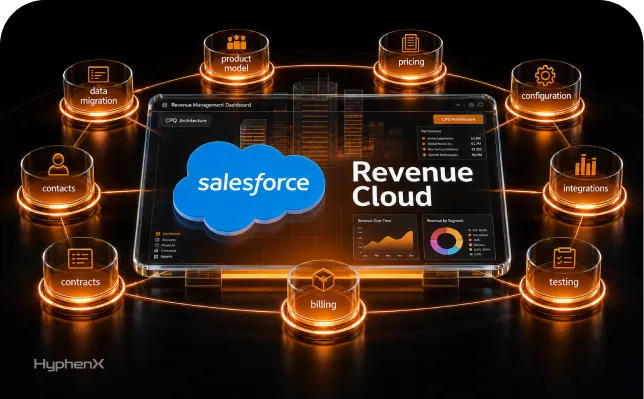
The practical consequence is that Salesforce for real estate developers is not a matter of switching on Sales Cloud and importing leads. The inventory model, the partner channel and the post-booking lifecycle all need to exist in the platform before the pipeline means anything.
2. What Actually Breaks In A Builder’s Sales Operation
Before designing anything, it is worth naming the failures that bring builders to look at a CRM for property developers in the first place. Almost every one of them is a data problem wearing a sales costume.
✓ Two teams sell the same unit. A direct customer and a channel partner customer are both told unit 1204 is available, because availability lives in a spreadsheet that is emailed rather than a record that is locked.
✓ Nobody knows the true cost sheet. Base price, floor rise, preferred location charge, parking, club membership, maintenance deposit and taxes are assembled by hand for each buyer, and two executives produce different totals for the same unit.
✓ Channel partner claims cannot be settled. A broker says the lead was theirs, the pre-sales desk says it came from a portal campaign, and there is no timestamped record that settles it. This dispute repeats every month and quietly damages the relationship.
✓ Site visits are tracked on WhatsApp. Confirmations, reschedules and no-shows sit in chat threads. The conversion rate from visit to booking, which is the most important number in the funnel, cannot be calculated.
✓ Collections chase construction rather than follow it. A milestone is certified, demand letters go out days or weeks later, and the finance team reconciles receipts against a schedule that lives in a separate system.
✓ Every project launch rebuilds the process. A new project means a new spreadsheet, a new price list and a new set of manual workarounds, because nothing was built to be reused.
✓ Leadership reporting arrives four days late. Weekly numbers are assembled by an analyst who merges exports from the pre-sales tool, the booking sheet and the accounting system.
✓ Customer questions after booking go nowhere. A buyer who paid two years ago asks about possession timing and there is no owner, no case, no history and no service level.
✓ Duplicate enquiries inflate everything. The same buyer enquires through a portal, a hoarding number and a broker, creating three records, three follow-ups and one irritated customer.
That last point is worth pausing on, because it is the one most likely to be dismissed as minor. Gartner has noted that poor data quality costs organizations at least $12.9 million a year on average according to its 2020 research. The figure spans organisations of very different sizes, so treat it as an order of magnitude rather than a forecast. In a developer’s context the cost is more specific: duplicate enquiries corrupt source attribution, and source attribution is what marketing spend is allocated on.
None of these problems is solved by better effort. They are solved by putting inventory, pricing, partner attribution and the payment schedule into the same system as the pipeline, so that a single record answers the question rather than three people reconciling three answers.
3. The Inventory Layer: Projects, Towers, Units And Availability
| Object | What it represents | Key fields and behaviour |
|---|---|---|
| Project | A registered development, usually matching the regulatory registration | Registration number, location, land parcel, approval status, launch date, declared completion date |
| Phase or tower | A construction and release unit within the project | Structure status, floors, release date, current construction milestone |
| Unit type | A repeatable configuration such as a 3 BHK of a given carpet area | Carpet area, built-up area, layout reference, base rate, standard specification |
| Unit | One sellable apartment, plot or floor with a specific number | Floor, facing, view, carpet area, status, current price, hold expiry, booking reference |
| Price version | A dated price list rather than a single mutable price field | Effective from, effective to, base rate, escalations, approval record |
| Charge component | Each item that makes up the landed cost | Type, basis of calculation, whether it is taxable, whether it is negotiable |
| Hold or block | A time-limited reservation against a unit | Requested by, reason, expiry timestamp, automatic release behaviour |
4. The Demand Layer: Sources, Routing And The Pre-Sales Desk
Developer demand arrives from more directions than most industries deal with. Property portals, performance marketing, hoardings with unique numbers, site walk-ins, referral from existing customers, and a broker network submitting names by phone, email and portal. Each source has different quality, different cost and different attribution rules.
The pre-sales desk sits between all of that and the sales team. Its job is to qualify, to book site visits and to protect the sales team’s time. Whether it does that well is largely determined by how the routing is built.
1 | Capture every source into one object Portals, web forms, campaign numbers, walk-in registers and partner submissions all land as leads with a source, a sub-source, a campaign reference and a timestamp. A source that cannot be captured automatically should be captured on a form, not remembered. |
2 | Deduplicate at the point of entry Configure matching and duplicate rules on phone and email before routing, not as a monthly cleanup. A duplicate caught at creation is a data question. A duplicate caught in month three is an attribution dispute and an annoyed customer. |
3 | Stamp attribution immutably Record the first touch and the partner claim, if any, with a timestamp that cannot be edited by the people whose payout depends on it. This single control removes most channel disputes. |
4 | Route by project and language, not round robin Assignment should consider which project the enquiry mentions, which location the buyer is in, and which language they wrote in. Round robin distributes work evenly and outcomes poorly. |
5 | Set a response clock and make it visible A first-response target measured in minutes, displayed on the record and on a desk dashboard. Developers who publish this number internally usually find the first month uncomfortable and the third month better. |
6 | Qualify against inventory that exists A pre-sales script that offers a configuration currently unavailable wastes a visit. Qualification screens should read live availability rather than a printed list. |
7 | Convert only when a visit is booked Holding leads in the pre-sales layer until a site visit is scheduled keeps the sales pipeline honest. A pipeline full of unqualified enquiries makes forecasting impossible. |
Duplicate prevention here is not optional. Salesforce ships native duplicate rules that can block or warn at creation, and configuring them properly prevents far more bad data than any periodic cleanup removes. Where enquiry volume spans several campaign platforms and a single record cannot act as the master, the consolidation usually belongs at the Data Cloud layer rather than inside the CRM object model.
One measurement note. Cost per booking, not cost per lead, should drive channel decisions. A source producing cheap leads that never reach a site visit is more expensive than a costly source that converts, and that calculation is only possible when source, visit and booking sit on the same record chain.
5. Site Visits, The Step That Decides The Quarter
For most developers the strongest predictor of monthly bookings is not enquiry volume. It is the number of completed site visits and the conversion rate from visit to booking. Yet in most real estate sales pipeline designs the site visit is the least instrumented step of all, managed through phone calls and chat messages that leave no measurable trace.
Scheduling as a record, not a message
A site visit should be an object with a date, a time, an assigned host, a project, a status and an outcome. Once it is a record, the funnel becomes measurable and the no-show rate becomes a manageable number rather than an anecdote.
Confirmation and reminder sequences
Most no-shows are not refusals. They are logistics failures. A confirmation at booking, a reminder the previous evening and a travel message on the morning of the visit will move the attendance rate, and the effect is measurable within a month.
Host capacity and site coverage
Weekend visits cluster. Without a view of who is available at which site, the sales team either overbooks and rushes buyers or underbooks and turns them away. Availability should be modelled rather than negotiated over the phone.
Structured visit outcomes
A visit should close with a recorded outcome: units shown, configuration preferred, objection raised, next step agreed. Free-text notes are better than nothing, but they cannot be aggregated, and the aggregate is what tells you whether a project is priced correctly.
Channel partner visits
When a broker brings a client, the visit must be attributed to that partner at the moment it is logged. Retrospective attribution is the single largest source of friction in channel partner management.
Re-visit tracking
Serious buyers usually visit more than once, often bringing family. Counting second and third visits separately is a stronger buying signal than most lead scores.
Salesforce provides native tooling for this. Salesforce Scheduler handles appointment booking with resource matching by location and time, and is available in Enterprise and Unlimited Editions. It can be surfaced on a website or an Experience Cloud site, which matters when you want channel partners booking their own client visits rather than telephoning the pre-sales desk.
The one metric to instrument first If a developer can only measure one new thing, it should be the conversion rate from completed site visit to booking, broken down by project, by source and by channel partner. It exposes pricing problems, sample flat problems, location problems and partner quality problems faster than any other single number, and it is nearly impossible to produce without the visit existing as a record. |
6. Channel Partner Management: Running The Broker Network As A Channel

For many developers, a majority of bookings arrive through external brokers. These partners are not employees, they sell competing projects alongside yours, and their loyalty follows whichever developer is easiest to work with. Channel partner management is therefore a retention problem as much as a sales problem.
The friction points are consistent across markets: lead ownership disputes, slow payout, no visibility into the status of a submitted client, and having to telephone someone at the developer to find out whether a unit is still available. Each of these is solvable with a partner portal, and the same platform that runs the internal pipeline can run it.
Partner registration and tiering Onboard brokers with documentation, agreement status and a tier that governs commission rates and inventory visibility. Tiering gives the relationship structure and gives the developer a lever other than discounting. Client registration with a clock A partner registers a prospective buyer and receives a timestamped exclusivity window. This one mechanism removes most attribution disputes, because the rule is visible to both sides before the dispute arises. Live availability, filtered by tier Partners see what is genuinely available, in the configurations they are permitted to sell. It stops the phone calls and stops brokers pitching sold units. | Self-service site visit booking Partners schedule their client’s visit directly against real host availability rather than through the pre-sales desk. Payout visibility Commission accrued, invoiced, approved and paid, visible without asking. Payment delay is the most common reason a broker network cools on a developer, and much of the frustration is about not knowing rather than about waiting. Collateral and pricing that is current One place holding the current price list, brochure, floor plans and offers, with older versions withdrawn. Brokers quoting a superseded price is a self-inflicted problem. |
Salesforce documents this pattern directly. Managing partner relationships with Experience Cloud sites covers shared lead pools, deal registration to minimise channel conflict, tiering and partner scorecards, and notes that partner sites are available in Enterprise, Performance, Unlimited and Developer Editions. There is a broader getting started guide to partner relationship management and a Trailhead module on channel management and partner portal strategy if the internal team wants to understand the model before scoping a build.
The evidence that this works on real estate specifically is not hypothetical. Raymond Realty built a partner portal on Experience Cloud, described by its leadership as making brokers feel like valued channel partners, letting them log conversations, view their lead pipeline, access project and pricing information, and track invoicing and payments. That is examined further in section 13 alongside the reported numbers.
Building the portal is an Experience Cloud project rather than a Sales Cloud one, and it is worth scoping separately. Portals fail more often on onboarding and content freshness than on technical build, so plan who maintains the price list before deciding what the homepage looks like.
7. From Booking To Agreement: Costing, Approvals And Documents
A brokerage sells other people’s property. A developer sells its own, one unit at a time, from a fixed and shrinking supply, through a broker network it does not employ, against a construction schedule it does not fully control. Those differences change what the CRM has to do. This guide covers how builders and developers actually run on Salesforce, from lead source to possession, and what to build in which order.
The moment a buyer says yes, a developer’s process becomes unusually document-heavy and approval-heavy. This is the stage where a generic real estate CRM most often runs out of road, because it was designed to close a deal rather than to assemble one.
The cost sheet is the centre of it. A unit’s landed cost is not a price. It is a calculation across many components, some of which are per square foot, some fixed, some taxable, some negotiable within limits and some not negotiable at all.
Component | Typical basis | Why it needs to be systematised |
|---|---|---|
Base consideration | Rate multiplied by area, from the current price version | Must reference the dated price list so a quote can be reconstructed months later |
Floor rise | Per floor above a defined baseline | Frequently miscalculated by hand, and the error is discovered at agreement stage |
Preferred location charge | Percentage or fixed amount by facing, corner or view | Varies by tower and is the component most often applied inconsistently |
Parking and storage | Fixed per bay, sometimes bundled | Allocation must be tracked against physical availability, not just charged |
Club, infrastructure and amenity charges | Fixed per unit or per area | Often introduced mid-project, which is exactly why versioning matters |
Deposits and advance maintenance | Fixed or per area for a defined period | Refundable and non-refundable items must be distinguishable for finance |
Statutory charges and taxes | As applicable in the jurisdiction | Rates change, and quotes issued under an older rate must remain reconstructable |
Discount or waiver | Absolute or percentage, within an approval matrix | The single component that most needs an enforced approval path and an audit trail |
Around that sits an approval matrix. A sales executive may waive nothing. A sales manager may approve up to a defined limit. Beyond that it escalates, and above a further threshold it reaches the business head. Building this as an enforced workflow rather than an email chain does two things: it makes the cycle time visible, and it means the discount actually granted can be reported on, which most developers cannot currently do with confidence.
Documentation follows the same logic. Booking form, know-your-customer documents, payment plan election, allotment letter and agreement each have a state, an owner and a due date. Modelling them as records rather than as attachments in a folder is what allows a developer to answer how many bookings are stuck awaiting a document, which is usually a larger number than management expects.
This stage is where configuration work concentrates, and it is worth resisting the urge to code it. Most of it is achievable with declarative workflow automation, and keeping it declarative is what allows the finance team to change a threshold later without a release cycle. Reserve custom development for the genuinely complex calculations that configuration cannot express.
8. Collections Linked To Construction Milestones
Under a construction-linked payment plan, money is not due on a calendar. It is due when a stage of construction is certified complete. That makes the collections process dependent on information that originates outside the sales system, and the handoff between the two is where developers lose weeks.
The mechanics are not complicated, but they must be modelled explicitly rather than assumed.
Payment plan | A named schedule attached to a booking, made up of instalments, each linked to a trigger. Construction linked, time linked, or a hybrid. The plan chosen at booking must be stored, because plans differ between customers in the same tower. |
Milestone certification | The event that makes an instalment due. It originates with the projects or engineering function, and the CRM should receive it rather than invent it. A single certification can make hundreds of instalments due simultaneously. |
Demand generation | The letter or invoice raised against each affected booking. Automation matters here because the volume arrives in a burst and manual issue introduces days of delay on money already earned. |
Receipt and reconciliation | Payments land in the finance system. The CRM needs enough visibility to know what is outstanding and for how long, without becoming a second ledger. |
Dunning and follow-up | A structured sequence of reminders with ownership and escalation, rather than a collections executive working from a spreadsheet sorted by age. |
Interest and penalty | Applied per the agreement, with a waiver path that follows the same approval discipline as a discount. Undocumented waivers are a recurring audit finding. |
Where developers most often get collections wrong in the CRM ! Building a second accounts receivable ledger inside Salesforce instead of integrating with the finance system that already owns it. ! Storing the payment plan as free text on the booking, which makes bulk demand generation impossible. ! Triggering demands from a date field rather than from a certified milestone, which produces demands for work not yet done. ! Allowing interest waivers without an approval record, then being unable to explain the revenue gap at year end. ! Treating the demand letter as a document to be generated rather than as a record with a status that can be reported on. |
The correct boundary is usually clear once stated: the CRM owns the customer, the booking, the plan and the communication, and the finance system owns the ledger. Everything else is an integration design question. Where a legacy booking system holds years of historical schedules, moving it is a data migration workstream in its own right and should not be folded into the main build.
One consequence is worth stating plainly for anyone building the business case. Faster demand generation after certification is not a productivity improvement. It is a working capital improvement, and it is measurable in days. That framing tends to travel further with a finance sponsor than a discussion about user experience.
9. After The Booking: The Customer Who Waits Three Years
A homebuyer who books an under-construction unit enters a long, anxious period in which they have paid a great deal and received nothing they can occupy. Most of the reputational damage a developer suffers is generated here rather than during the sale, and most CRM implementations stop just before this point.
✓ Give every booked customer an owner. Post-booking queries land nowhere in most developer setups because the sales executive has moved to the next project. A named owner and a service queue changes the experience immediately.
✓ Publish construction progress proactively. A quarterly update with photographs, sent without being asked, reduces inbound anxiety calls more effectively than any faster response time. The information usually already exists for regulatory filing.
✓ Make the payment position self-servable. Paid, due, upcoming and any interest applied, visible to the customer. A large share of inbound contact is a question the customer could answer themselves.
✓ Track modification and customisation requests. Buyers request changes during construction. Without a structured process these arrive verbally, get half-agreed and become disputes at handover.
✓ Instrument the handover process. Snagging, defect logging, rectification and final acceptance are service processes. Running them on a case model rather than on site paperwork gives the developer a defect trend it can feed back to procurement.
✓ Keep the record after possession. Defect liability, resale, referral and the next purchase all depend on the customer history surviving handover. Archiving the record at possession destroys the most valuable asset the sales process produced.
There is a commercial argument here that is easy to overlook. Referrals from existing customers are consistently among the lowest cost demand sources a developer has, and they come disproportionately from buyers who felt informed during construction. Post-booking service is a demand generation activity, not only a cost centre.
This is Service Cloud territory rather than Sales Cloud, and the two need to share the customer record rather than sit in separate systems. Where the volume of routine status questions is high, this is also the most defensible first use case for Agentforce, because the questions are repetitive, the answers are factual, and the escalation path to a human is obvious.
10. The Salesforce Architecture Behind It
With the process understood, the product decisions become straightforward. The mistake to avoid is buying every cloud at the start and implementing them simultaneously.
What each layer does
Layer | Product | What it carries for a developer |
|---|---|---|
Core selling | Sales Cloud | Leads, enquiries, site visits, opportunities against units, bookings, approval workflows and the real estate sales pipeline |
Inventory | Custom objects on the platform | Projects, towers, unit types, units, price versions, holds. Usually configured rather than bought |
Partner channel | Experience Cloud | Broker onboarding, client registration, availability, visit booking, payout visibility |
Customer service | Service Cloud | Post-booking cases, construction queries, snagging, handover, defect liability |
Demand generation | Marketing Cloud | Campaigns, nurture during long consideration cycles, construction update communication |
Data unification | Data Cloud | Identity resolution across portals, campaigns and walk-ins where no single object is the master |
Assistive automation | Agentforce | Routine enquiry handling and status questions, with escalation to a person |
System boundaries | Integration tooling | ERP, finance, project management, telephony, payment gateway and document signing |
Where the build effort actually goes
Effort does not distribute the way people expect. The inventory model and the cost sheet engine consume a disproportionate share, because they are specific to the business and cannot be taken off a shelf. The partner portal is next. Standard pipeline configuration, which is what most people picture when they imagine a CRM project, is usually among the smaller components.
This has a scoping implication. If a proposal allocates most of its effort to pipeline configuration and treats inventory as a data load, it has misread the problem. Property inventory management for a builder is a design exercise, not an import.
Integration boundaries to settle early
ERP and finance Decide the master for the ledger, for customer master data and for the unit master. Write it down before development starts, because reversing this decision later is expensive. Project management Milestone certification must flow in reliably. A manual re-entry step here will silently reintroduce the delay the project was meant to remove. | Telephony Call recording and click to dial matter for a pre-sales desk operating at volume, and call outcomes should update the record rather than a separate dialler report. Payments and document signing These shorten cycle time visibly and are among the easiest wins to demonstrate to a sceptical sales team. |
Scoping this well is the difference between a programme that lands and one that stalls halfway. It is the core of a Salesforce implementation for a developer, and it is worth spending real time on before any configuration begins.
11. The Reports A Developer Actually Needs
Most developer dashboards report activity. Calls made, leads received, visits done. Those are inputs. The reports that change decisions are the ones that connect inventory, price and channel to outcomes.
Report | What it answers | Decision it drives |
|---|---|---|
Inventory ageing by configuration | Which unit types have been available longest, by tower and floor band | Whether to reprice, reposition or change the release sequence |
Visit to booking conversion | Conversion by project, source, channel partner and executive | Where the sales problem actually sits, rather than where it is assumed to sit |
Cost per booking by source | Total spend divided by bookings attributable to that source | Marketing allocation, replacing cost per lead as the guiding number |
Channel partner scorecard | Registrations, visits, bookings, cancellation rate and payout status per partner | Tiering, incentive design and which relationships to invest in |
Discount leakage | Approved discounts and waivers against list, by approver and by project | Whether the approval matrix is working or being routed around |
Collections against milestone | Amount due, raised, collected and overdue per certified milestone | Working capital position and where collections effort should focus |
Cancellation analysis | Cancellations by stage, reason and elapsed time since booking | Whether cancellations are a funding problem, a delivery problem or a mis-selling problem |
Pipeline against remaining inventory | Weighted pipeline compared with what is left to sell, by configuration | Whether the sales target is achievable with the inventory that exists |
That final report deserves emphasis because it is the one developers most consistently lack. A brokerage can chase a bigger target by adding listings. A developer cannot. When weighted pipeline for three bedroom units exceeds the number of three bedroom units remaining, the constraint is supply and the correct response is pricing, not effort. Very few builders can produce that comparison on demand, and it is straightforward once inventory and pipeline share a platform.
Reporting requirements change every time a project launches, so a real estate CRM needs someone maintaining this layer rather than whoever has time. That is a reasonable thing to place under managed services rather than to rebuild internally each quarter.
12. Compliance, Audit Trail And Regulatory Reporting
A developer carries obligations a brokerage does not, and a CRM for property developers has to sit comfortably alongside them. Depending on the jurisdiction these may include project registration before marketing, disclosure of approved plans and timelines, escrow or designated account requirements for buyer funds, periodic progress reporting to a regulator, and prescribed handling of buyer complaints.
In India these sit with the promoter under the RERA framework, and state authorities publish their own guidance on periodic compliance, including project updates. MahaRERA, for example, publishes guidance for periodic compliances setting out what promoters must file and when. The specifics differ by state, so treat the state authority’s published guidance as the source rather than any summary, including this one.
The CRM is not the compliance system. What it can do is make compliance cheap by holding an audit trail that already exists as a by-product of doing the work properly.
☐ Every price a customer was quoted is reconstructable from a dated price version rather than from an email.
☐ Every discount and interest waiver carries an approver, a timestamp and a stated reason.
☐ Unit status transitions are logged with actor and time, so a double-allocation can be investigated rather than argued about.
☐ Channel partner attribution is timestamped at registration and not editable by the claimant.
☐ Booking documents have states and owners, so an incomplete file is visible before it becomes a problem.
☐ Customer complaints are cases with response times, not messages in an inbox.
☐ Construction progress communicated to buyers is stored against the project, matching what was filed with the regulator.
☐ Data access is restricted by role, so a channel partner sees their own clients and nobody else’s.
A practical test for any developer CRM design Pick a booking from eighteen months ago and try to answer four questions from the system alone: what price list was in force on the day it was quoted, who approved the discount, which partner registered the client and when, and what was communicated to that buyer about possession. If all four require asking a person, the audit trail is not yet doing its job. |
13. What Developers Have Achieved, With The Numbers
Vendor case studies deserve to be read carefully. They are published by the vendor, the figures are supplied by the customer, and the baseline is rarely disclosed. With that caveat stated, the published real estate examples are useful because they describe the same processes discussed above rather than generic transformation.
100% Raymond Realty pre-sales productivity increase | 5% to 12% Raymond Realty conversion rate | 10% Tata Realty higher conversions | 87% Capdeal lead response time reduction |
Raymond Realty
Reported fragmented data across worksheets and channels, and broker partners operating outside the digital system, requiring in-person contact for lead tracking and payment follow-up. Using Sales Cloud, Service Cloud, Experience Cloud, Data Cloud and Agentforce for Service, the published results include a 100 percent increase in pre-sales team productivity, conversion rates rising from 5 percent to 12 percent, complaint escalation falling from 100 percent to 20 percent, and service resolution maintained under 10 hours. The partner portal, Raymond Realty Sync, lets brokers log conversations, view their lead pipeline, access project and pricing information and track invoicing and payments.
Tata Realty and Infrastructure
Listed among Salesforce India customer stories as driving 10 percent higher conversions with Agentforce, with AI agents engaging homebuyers across the lifecycle. Salesforce also reports email open rates of 50 to 60 percent and a 30 percent increase in engagement.
Kalpataru
A developer founded in 1969, using Sales Cloud with Marketing Cloud under exploration. The published account is qualitative rather than numeric, with its Group Chief Digital and Information Officer noting that every customer interaction is captured on the platform, making it easier for sales representatives to personalise property recommendations. It is a useful example of an early-stage implementation described honestly, without invented metrics.
Capdeal and Ambuja Neotia
Reported in the same Salesforce India roundup, with Capdeal citing an 87 percent reduction in lead response time and a 77 percent reduction in conversion time, and Ambuja Neotia citing a 300 percent productivity increase and a 50 percent reduction in case resolution time.
Sources for these are the Raymond Realty story, the Kalpataru story, the Salesforce India roundup on real estate trailblazers and the India customer stories index. Read them as directional evidence that these processes can be moved onto one platform, not as a forecast for any particular project.
It is worth noting what these accounts have in common. In each case the reported gain came from removing a handoff rather than from adding a feature. Pre-sales productivity rose because the data stopped living in worksheets. Conversion rose because partners came inside the system. Response time fell because routing stopped depending on a person reading an inbox. That pattern is more transferable than any individual percentage.
For market context on the wider environment developers are selling into, the US Census Bureau publishes monthly new residential sales data, and its May 2026 release, dated 24 June 2026, put new single-family houses sold at a seasonally adjusted annual rate of 580,000, a median sales price of $424,900 and 10.3 months of supply. When inventory sits for that long, the quality of the sales and follow-up process stops being a back-office concern.
14. Implementation Sequence, And Vertical Product Versus Configured Build

Two decisions remain. What to build first, and whether to configure Salesforce or buy a purpose-built real estate product on top of it.
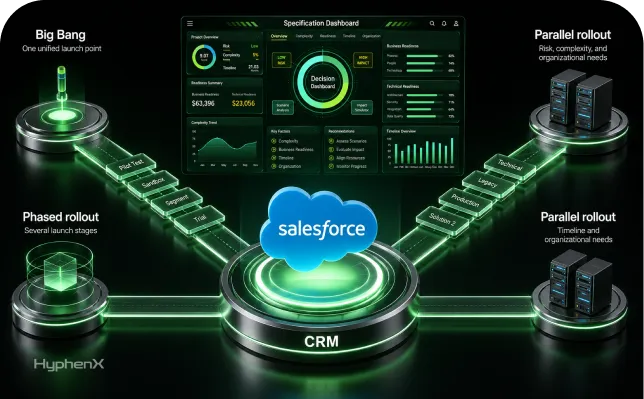
On sequencing, the failure mode is attempting everything at once across every project. A developer cannot pause selling while a system is built, so the sequence has to deliver something usable early without painting the later phases into a corner.
1 | Model inventory first, even before pipeline Projects, towers, unit types, units, price versions and the status lifecycle. Nothing downstream is trustworthy without it, and retrofitting it later means reworking every record created in the meantime. |
2 | Bring pre-sales and lead capture in All sources into one object, deduplication at entry, routing rules and a response clock. This delivers a visible improvement within weeks and builds the credibility the later phases need. |
3 | Instrument the site visit Scheduling, reminders, structured outcomes and attribution. This is where the funnel becomes measurable for the first time. |
4 | Build the cost sheet and approval matrix The heaviest configuration item, and the one that produces the largest reduction in errors and cycle time at agreement stage. |
5 | Launch the channel partner portal Registration, client registration with a clock, availability, visit booking and payout visibility. Launch with one partner tier and expand, rather than onboarding the whole network in a week. |
6 | Connect collections to milestones Payment plans, milestone-triggered demands and finance integration. Sequence this after the finance system boundary is agreed, not before. |
7 | Extend into post-booking service Ownership, cases, construction updates and handover. This is where most implementations stop early and where much of the referral value sits. |
8 | Add assistive automation last Automate routine enquiry handling only once the underlying data is trustworthy. Automation applied to a poor process reproduces the poor process at higher speed. |
On the product question there is no universal answer, and both routes deliver Salesforce for real estate developers in a usable form. The trade-offs are stable enough to reason about.
Configured build on the core platform | Purpose-built real estate product |
|---|---|
Fit to your process | |
Shaped to how you actually sell, including the cost sheet and approval matrix specific to your business | Fits the vendor’s model of how developers sell, which may be close or may require compromise |
Time to first value | |
Longer, because the inventory model and cost engine are designed rather than inherited | Shorter, since the object model and common processes arrive ready |
Ongoing change | |
Changed by your team or your partner without waiting for a vendor roadmap | Dependent on the vendor for structural change, though configuration is usually available |
Upgrade exposure | |
You own the upgrade path and the regression testing | Managed by the vendor, with less control over timing |
Cost shape | |
Higher initial build, lower recurring licence beyond platform | Lower initial build, additional recurring licence per user |
Best suited to | |
Developers with a distinctive process, multiple project types, or an existing org already carrying real estate configuration | Developers wanting a standard residential process running quickly with limited internal technical capacity |
Questions worth asking before either path is chosen ! How does the option handle price versioning, and can a quote from a year ago be reconstructed exactly? ! Can a hold expire automatically, and what happens to the unit and the customer record when it does? ! What is the approval model for discounts, and is the audit trail exportable for a regulatory query? ! Does channel partner attribution carry an immutable timestamp, and who can edit it? ! What happens at the finance boundary, and which system is authoritative for the ledger? ! If the product is a managed package, what happens to your configuration if you later leave it? | |
Whichever route is chosen, the governance question outlasts it. A named owner for the org, a forum that can refuse requests, and a maintained sandbox and release process matter more over five years than the initial platform decision. Where internal capacity is thin, that is a reasonable case for ongoing managed support rather than a larger initial build. Where a developer is starting small, a deliberately narrow quickstart on one project is usually a better first step than a programme spanning the whole portfolio.
The summary is simple enough. Salesforce for real estate developers works when it is treated as an operating system for a finite inventory sold through a partner network over a multi-year delivery cycle, and it disappoints when it is treated as a contact database with a pipeline attached. The difference is decided in the design, well before anyone opens Setup. If you are weighing it up, a scoping conversation focused on your inventory model and your channel is a more useful starting point than a product demonstration.
Frequently Asked Questions
1. Is Salesforce suitable for real estate developers, or is it built for brokerages?
The core platform is industry-neutral. What makes Salesforce for real estate developers work is the configuration layer: an inventory model covering projects, towers, unit types and units, a versioned price list, a cost sheet with an approval matrix, and a partner portal for the broker network. Published customer stories from developers including Raymond Realty, Kalpataru and Tata Realty describe exactly these processes running on the platform.
2. What is the difference between a real estate CRM for a developer and one for a brokerage?
A brokerage manages replaceable listings and closes at transaction. A developer manages a finite inventory that depletes, prices centrally with approval control, sells substantially through external brokers, and stays with the customer through construction, staged collections and handover. A real estate CRM built for brokerages typically has no unit lifecycle, no cost sheet engine and no construction-linked payment model.
3. How should property inventory management be modelled in Salesforce?
As custom objects with an enforced status lifecycle rather than as a list. Project, phase or tower, unit type, unit, price version, charge component and hold. Unit status should move through defined transitions with the actor and timestamp recorded, prices should be versioned by effective date so any past quote can be reconstructed, and holds should expire automatically rather than relying on someone to release them.
4. Can channel partner management run on the same platform as the internal sales team?
Yes, and that is the main argument for doing it there. Salesforce documents partner relationship management on Experience Cloud sites, covering shared lead pools, deal registration to reduce channel conflict, tiering and partner scorecards. Running the broker network on the same platform means client registration, availability and payout status all read from the same records the internal team uses.
5. What actually reduces lead ownership disputes with brokers?
A client registration mechanism with a timestamped exclusivity window, where the timestamp cannot be edited by anyone whose payout depends on it. The rule has to be visible to both sides before a dispute arises. Retrospective attribution is the largest single source of friction in channel partner management and it is almost entirely preventable.
6. How long does a developer implementation take?
It depends on how many projects, how complex the cost sheet is and how many systems must integrate. The sequence matters more than the total. Inventory and pre-sales first, then site visits, then the cost sheet and approvals, then the partner portal, then collections, then post-booking service. Each phase should deliver something usable rather than waiting for a single launch.
7. Should we buy a purpose-built real estate product or configure the platform ourselves?
A vertical product reaches first value faster and suits a standard residential process with limited internal technical capacity. A configured build fits a distinctive process, multiple project types or an existing org, and leaves change control with you. Ask how each handles price versioning, automatic hold expiry, the discount approval trail and the finance boundary before deciding.
8. How do construction-linked payments work in the CRM?
The booking carries a named payment plan of instalments, each linked to a trigger. When the projects function certifies a milestone, that event flows into the CRM and makes the corresponding instalments due, generating demands in bulk. The finance system remains the ledger. Building a second accounts receivable inside the CRM is the most common design error here.
9. What should we measure first in the real estate sales pipeline?
Conversion from completed site visit to booking, broken down by project, source, channel partner and executive. It surfaces pricing, sample flat, location and partner quality problems faster than any other single number, and it requires the site visit to exist as a record rather than as a chat message.
10. Does a CRM for property developers help after possession, or does it stop at handover?
It should continue. Defect liability periods, resale, referrals and repeat purchase all depend on the customer history surviving handover, and referral is consistently among the lowest cost demand sources a developer has. A CRM for property developers that archives the record at possession discards the most valuable asset the sales process created.
Sources Referenced In This Article
Source | What it supports on this page |
|---|---|
Partner portal on Experience Cloud, pre-sales productivity and conversion figures | |
Sales Cloud usage and the qualitative account of captured interactions | |
Tata Realty, Capdeal and Ambuja Neotia figures, and Indian market context | |
Tata Realty conversion uplift with Agentforce | |
Deal registration, tiering, scorecards and edition availability | |
Partner relationship management fundamentals referenced in section 6 | |
Background module for teams scoping a partner portal | |
Appointment booking with resource matching, used for site visits | |
Native duplicate prevention at the point of lead entry | |
Per-edition field limits quoted in the inventory section | |
Official monthly new home sales series | |
Sales rate, median price and months of supply, released 24 June 2026 | |
Example of state-level promoter reporting obligations in India | |
Average annual cost of poor data quality, from 2020 research |